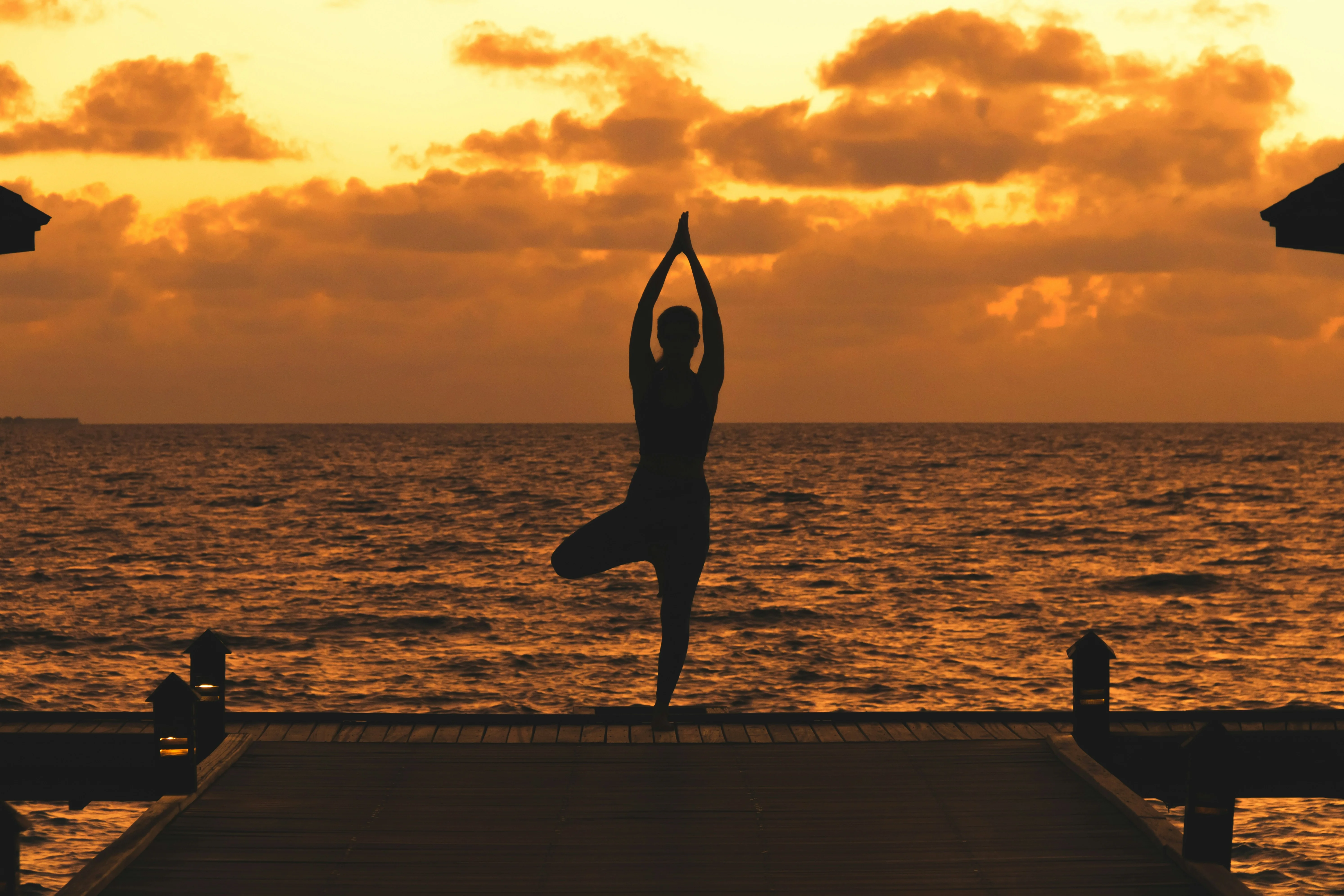
yoga flow
Yoga Flow Guide: 13 Poses with Alignment Tips for Improved Health and Flexibility
A complete 13-pose yoga sequence with detailed alignment cues, breath work, and hold times. Move from grounding poses through standing work to deeper hip stretches, with practices suitable for beginners through experienced yogis.
Bodhgriha Team
Bodhgriha Institute
This flowing sequence is designed to build strength, improve flexibility, and cultivate presence in the body. Whether you're a beginner establishing foundational awareness or a seasoned practitioner refining your alignment, this 13-pose flow offers something to notice in each asana. The sequence moves from grounding poses to standing work, then deeper stretches, before concluding in restorative shapes that calm the nervous system.
What makes this sequence particularly valuable is its progression: we begin with stability before adding complexity, move through standing poses that build heat and awareness, then cool the body with deeper hip and spinal work. The flow typically takes 45-60 minutes, depending on your pace and how long you hold each pose. This is not a vigorous vinyasa... it's a mindful, alignment-focused practice that honors both strength and ease.

1. Mountain Pose (Tadasana) - 1-2 minutes
Breath: Establish natural, even breathing. Inhale for a count of 4, exhale for a count of 4.
Mountain pose is the foundation of all standing poses and often the most overlooked. This is where you recalibrate, reset, and reconnect with the earth beneath you.
Alignment Cues:
- Stand with your feet hip-width apart (about 4-6 inches between your inner ankles).
- Press all four corners of your feet down: the inner heel, outer heel, inner ball of the foot, and outer ball.
- Engage your quadriceps firmly without locking your knees; this should create a subtle lift through your kneecaps.
- Stack your pelvis directly over your ankles. Imagine your sitting bones dropping toward the earth.
- Press your shoulders back and down, away from your ears. Your arms hang naturally at your sides with palms facing forward or neutral.
- Lengthen your spine; imagine a thread pulling the crown of your head upward.
- Your gaze (drishti) is forward and level.
Why it matters: Mountain pose teaches the body how to stand with integrity. In a world where we typically slouch and misalign, this pose rewires your nervous system to recognize neutral. Hold this for a full 1-2 minutes and notice how much information your body contains.
2. Back Bend - 1 minute
Breath: Inhale as you lift the chest; exhale gently as you deepen slightly. Never force the exhale.
From Mountain Pose, inhale and gently lift your chest, opening your heart toward the sky. Your hands can rest on your lower back for support, or reach behind you with palms pressing together.
Alignment Cues:
- Press your feet firmly into the earth; engage your leg muscles to support your spine.
- Rather than dropping your head back immediately, lengthen the back of your neck first. This protects your cervical spine.
- Lift from your heart center, not from your lower back. The movement should feel distributed across your entire spine.
- Keep your shoulders externally rotated; draw your shoulder blades down your back.
- Engage your core slightly to prevent your ribs from flaring excessively.
- If you feel strain in your lower back, reduce the depth of the bend and focus on opening your chest instead.
Breath cue: As you inhale, imagine breath flowing up your spine and out through your heart. As you exhale, release tension from the back of your neck and shoulders.
3. Tree Pose (Vrksasana) - 30 seconds each side
Breath: Calm, steady breathing. Count: inhale 4, exhale 4.
Transition to standing on your right leg. Bend your left knee and place the sole of your left foot on your inner right thigh (or calf, if the thigh is not accessible). Bring your hands to heart center.
Alignment Cues:
- Press your standing leg's foot firmly into the earth. Spread your toes wide.
- Engage your standing leg's quadriceps to create stability.
- Square your hips toward the front of the mat as much as possible; externally rotate your bottom hip.
- Draw your left knee back and open, creating space in your hip socket.
- Keep your torso upright; resist the urge to lean away from your lifted leg.
- Gaze softly at a fixed point (drishti) to aid balance.
- If your left hip feels strained, lower your foot to the calf or shin instead of the thigh.
Hold: 30 seconds on right leg, 30 seconds on left leg.
Insight: Tree pose teaches us that balance isn't perfection...it's constant micro-adjustments. Your body will wobble; this is the point. Notice without judgment.
4. Warrior III (Virabhadrasana III) - 30 seconds each side
Breath: Inhale to lengthen; exhale to deepen slightly into the pose.
From Tree Pose, place your left foot back down. Shift your weight onto your right foot. Inhale, then exhale as you lean forward, extending your left leg behind you. Your body forms a "T" shape. Your hands can press to heart center or extend overhead.
Alignment Cues:
- Square your hips as much as possible. Your left hip will naturally want to open toward the sky; gently draw it toward the midline.
- Press the top of your left foot gently downward to engage the back leg.
- Your standing leg remains engaged; press through all four corners of the right foot.
- Your torso hinges from the hip, not the waist. Keep your spine long.
- Your head follows the line of your spine; gaze down softly.
- If balancing is difficult, place your hands on blocks or a chair for support.
Hold: 30 seconds right leg, 30 seconds left leg.
5. Warrior I (Virabhadrasana I) - 1 minute each side
Breath: Inhale as you ground; exhale as you sink deeper into the lunge.
Step your left foot back into a high lunge. Square your hips and turn your feet so your front toes point forward and your back foot is at a 45-degree angle. Raise your arms overhead.
Alignment Cues:
- Your front knee stacks over your ankle; do not let it collapse inward.
- Square your hips toward the front of the mat. This is challenging; be patient with yourself.
- Ground your back heel; press the outer edge of your back foot down.
- Lengthen your spine; inhale and lift your ribs away from your pelvis.
- Your shoulders stay back; avoid hunching them toward your ears.
- Gaze upward slightly if your neck allows, or keep your eyes neutral.
- If your back heel doesn't touch the ground, that's fine...keep more weight in the ball of your back foot.
Breath Cue: As you inhale, imagine drawing strength from the earth up through your legs. As you exhale, soften your shoulders and deepen your hip flexor stretch.
Hold: 1 minute right leg forward, 1 minute left leg forward.
6. Forward Bend (Uttanasana) - 1-2 minutes
Breath: Inhale to lengthen the spine; exhale to fold deeper.
From Warrior I, straighten your front leg and fold forward over both legs. Let your head and arms hang heavy.
Alignment Cues:
- Hinge from your hips, not your lower back. Maintain a slight microbend in your knees if your hamstrings are tight.
- Press your feet firmly down; press the four corners into the earth.
- Relax your neck; do not nod your head aggressively.
- If it feels comfortable, grab opposite elbows and gently sway side to side to release tension.
- Your goal is not to touch your toes; your goal is to feel the stretch in your hamstrings and calves.
Hold: 1-2 minutes.
7. Downward Dog (Adho Mukha Svanasana) - 1-2 minutes
Breath: Inhale through the nose for 4 counts, exhale through the nose for 4 counts.
From forward fold, place your hands on the mat shoulder-width apart. Step or hop your feet back to create an inverted "V" shape with your body.
Alignment Cues:
- Press firmly through your palms, especially the base of your index finger and thumb.
- Spread your fingers wide; this distributes weight evenly and prevents wrist strain.
- Stack your shoulders over your wrists (not in front of them).
- Engage your core; draw your lower belly in gently.
- Press your chest toward your thighs; let your head rest lightly between your upper arms.
- Your feet are hip-width apart. Press all four corners of your feet down.
- If your hamstrings are tight, bend your knees generously. Downward Dog is not a rest pose; it's an active stretch.
Common mistake: Many practitioners collapse into their shoulders or drop their head. Instead, maintain active engagement. Downward Dog is a strengthening pose disguised as a stretch.
Hold: 1-2 minutes.
8. Cat Pose (Marjaryasana) - 30 seconds, flowing
Breath: Exhale as you round your spine; inhale as you release.
From Downward Dog, drop your knees to the mat and move to tabletop position (hands under shoulders, knees under hips). Exhale as you round your spine maximally, pressing your shoulder blades wide and drawing your chin toward your chest.
Alignment Cues:
- Press the floor away with your hands to create space between your shoulder blades.
- Draw your tailbone down and your pubic bone forward, creating maximum spinal flexion.
- Gaze gently downward, following the curve of your spine.
- Let the movement come from your spine, not from forcing your head down.
9. Cow Pose (Bitilasana) - 30 seconds, flowing
Breath: Inhale as you dip your belly; exhale to return to neutral.
From Cat, inhale and drop your belly, lifting your gaze and tailbone toward the sky. Your chest expands as your shoulder blades draw down your back.
Alignment Cues:
- Keep your neck neutral; gaze is slightly upward but not forced.
- Press your shoulders back and down.
- Engage your legs to support your lower back.
- Flow slowly between Cat and Cow 5-8 times, syncing movement with breath.
10. Child's Pose (Balasana) - 1-2 minutes
Breath: Slow, deep belly breathing. Inhale 4 counts, exhale 6 counts.
From tabletop, bring your big toes together and widen your knees. Sink your hips back to your heels and fold your torso forward, resting your forehead on the mat.
Alignment Cues:
- Extend your arms forward or rest them alongside your body...choose whichever feels more restorative.
- Let your shoulders relax; there should be no tension in your neck.
- Breathe into your back ribs; feel your back body expand as you inhale.
- This is a rest pose; there should be zero strain.
Hold: 1-2 minutes.
11. Pigeon Pose (Eka Pada Rajakapotasana Prep) - 1-2 minutes each side
Breath: Long, steady breathing. Let each exhale deepen the stretch slightly.
From Child's Pose, lift your torso and bring your right shin forward, creating a 90-degree angle (or as close as possible). Keep your left leg extended behind you. Fold forward over your right leg. Alternately, bend the back leg and hold the foot for strecth.
Alignment Cues:
- Your right hip will want to lift; gently press it down toward the earth.
- Keep your hips as level as possible, even if it means folding less.
- Your front shin can be parallel to the front of the mat or angled inward..choose whatever feels sustainable.
- Fold only as far as you can while maintaining a neutral spine.
- If this pose is very intense, stay in a more upright position, supporting your torso with your hands.
- For deeper stretch, bend the back leg and hold the foot.
Common issue: Pigeon is deep. Honor your body's edge. Forcing this pose can cause hip or knee injury.
Hold: 1-2 minutes right leg, 1-2 minutes left leg.
12. Half Lord of the Fishes (Ardha Matsyendrasana) - 1 minute each side
Breath: Inhale to lengthen the spine; exhale to deepen the twist.
Return to a seated position. Cross your right knee over your left leg, keeping your right foot on the floor. Sit tall and twist your torso toward your right, using your left elbow against your right knee for leverage.
Alignment Cues:
- Keep your spine long; twist from your mid-back, not your lower back.
- Press your sitting bones firmly into the mat.
- Your shoulders should stay square to the extent possible.
- Avoid forcing the twist; each exhale naturally deepens it.
- Do not pull aggressively on your head or neck.
Hold: 1 minute right side, 1 minute left side.
13. Corpse Pose (Savasana) - 5-10 minutes
Breath: Return to natural, automatic breathing. Do nothing.
Lie flat on your back, legs extended, feet falling naturally open, arms at your sides with palms facing up. Close your eyes.
Alignment Cues:
- Your body is completely supported; there should be zero muscular engagement.
- If your lower back bothers you, place a pillow under your knees.
- If your neck is uncomfortable, use a small pillow under your head.
- Let your mind settle like sediment in water.
The practice: Savasana is not sleep, though you may drift. It's a state of aware relaxation where the nervous system integrates the work you've done. Stay here at least 5 minutes; 10 is ideal.
Making This Flow Your Own
This sequence is a template, not a prescription. Your body is unique; it will have different needs on different days. Perhaps on a stiff morning, you'll hold each pose longer. On another day, you'll move through more quickly. Both approaches are valid.
The real work in yoga isn't achieving perfect alignment...it's showing up with attention. It's noticing where you hold tension, where you rush, where you soften. It's the conversation between your body and your breath, moment to moment.
Over time, as you repeat this sequence, you'll develop a felt sense of what each pose teaches. Warrior I will teach you about grounding. Tree Pose will teach you about balance. Pigeon will teach you patience. Forward Bend will teach you humility. Savasana will teach you that being is as important as doing.
This is the real yoga...not the perfect handstand or the deepest backbend, but the gradual recalibration of how you inhabit your body and move through the world.
Last updated July 09, 2026 at 20:03 UTC