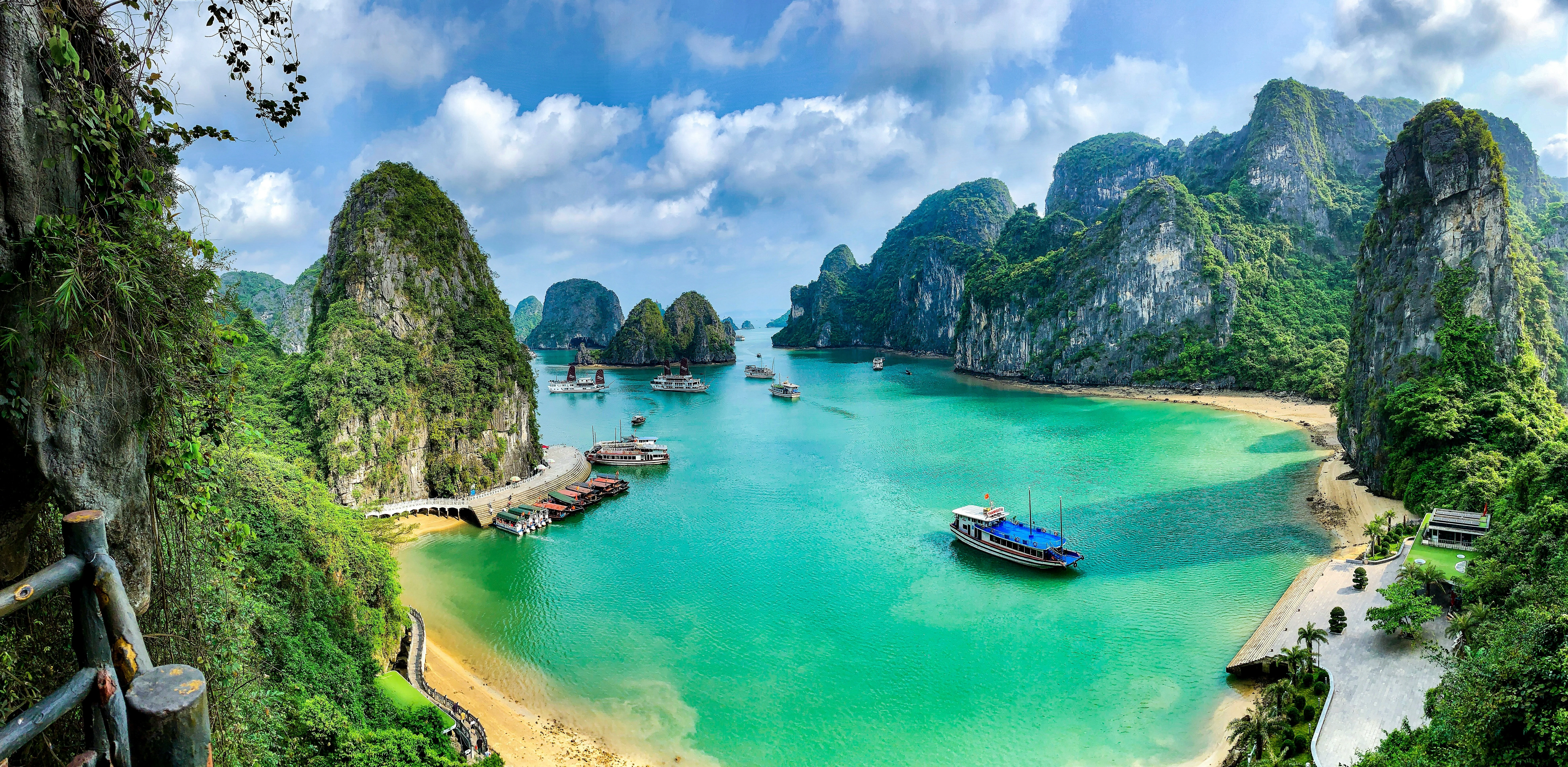
destination
10-Day Vietnam Itinerary: Wellness & Travel
Explore Vietnam as a contemplative journey through Hanoi's dawn tai chi circles, limestone karst valleys, rural hill-tribe villages, and imperial temples. This 10-day itinerary weaves yoga and meditation into authentic cultural immersion, designed for seekers who want grounded practice over polished studios.
Bodhgriha Team
Bodhgriha Institute
Vietnam isn't typically the first destination that comes to mind when planning a yoga retreat. Yet this slender country, stretched along the South China Sea, offers something quieter and more complex than the glossy resort experiences found in more mainstream wellness destinations. It's a place where Buddhist temples nestle into limestone cliffs, where morning tai chi practitioners gather in parks shrouded in mist, and where the pace of life...especially outside Hanoi and Ho Chi Minh City, invites genuine pause.
This 10-day itinerary weaves together yoga, meditation, and cultural immersion, designed for seekers who want to ground their practice in authentic experience rather than polished studio settings. You'll move through Vietnam's distinct landscapes and spiritual traditions, with time for both structured practice and the kind of wandering that practice actually opens up.
Day 1-2: Hanoi - The Meditative City at Dawn

On Day 2, wake before dawn... because Hanoi itself wakes early. At 5:30 AM, head to one of the city's parks. Hoan Kiem Lake is the most accessible. You'll find hundreds of locals practicing tai chi, qigong, and traditional Vietnamese exercises. Join them. A park attendant will likely invite you to join a group; if you don't know the movements, simply mirror those around you.
Watch how practitioners move with an ease born from decades of repetition. This is what embodied practice looks like when it's lived, not performed. Stay for at least an hour. Feel your body adjusting to movement that isn't your usual flow. This friction is the work.
Spend the morning exploring the temples around the lake. Ngoc Son Temple, with its famous Red Bridge, is particularly serene in early morning light. Light incense if you're moved to; sit quietly if you're not. The practice here isn't grand, it's the accumulation of small moments: incense smoke rising, the sound of a prayer bell, the discipline of centuries embedded in architecture. Buddhists refer to this as vipassana in motion, bare attention to what arises.
In the late morning, visit a small local market, perhaps Hang Be Market...simply to wander and observe. The sensory intensity of a Southeast Asian market is a legitimate practice. Notice colors, smells, the social choreography of commerce. Vietnamese markets operate on intimacy and relationship; vendors know their regulars, negotiate prices as theater, weave social fabric while selling groceries. Pay attention to how community is constructed through commerce.
In the afternoon, take a cooking class (or don't...sometimes rest is the real practice). Vietnamese food is intricate and seasonal; understanding how meals are constructed offers another layer of mindfulness. A teacher will show you how to build balance: the interplay of salty, sour, sweet, and bitter. This is the same balance Ayurveda teaches; Vietnam simply calls it something else. By day's end, eat what you've made slowly, noticing how intention changes flavor.
Day 3: Ninh Binh - Meditation Among Karst Peaks

Spend the afternoon on the Tam Coc river. Rather than the crowded tour-boat experience, arrange a private or small-group rowing boat through your accommodation. The boatmen, typically elderly women, have been navigating these waterways their entire lives. They move slowly, rowing with practiced ease between rock formations, under caves, past fishermen casting nets with movements that mirror the tai chi you watched in Hanoi.
This is meditation in motion: the sound of water, the boat gliding through limestone corridors, the rhythm of oars. Let this be your yoga class for the day. Your only job is to notice.
Stay in Ninh Binh town proper rather than at a resort. Eat at family-run restaurants. Walk the quiet streets in the evening.
Day 4-5: Mai Chau Valley - Hillside Practice & Rural Wisdom
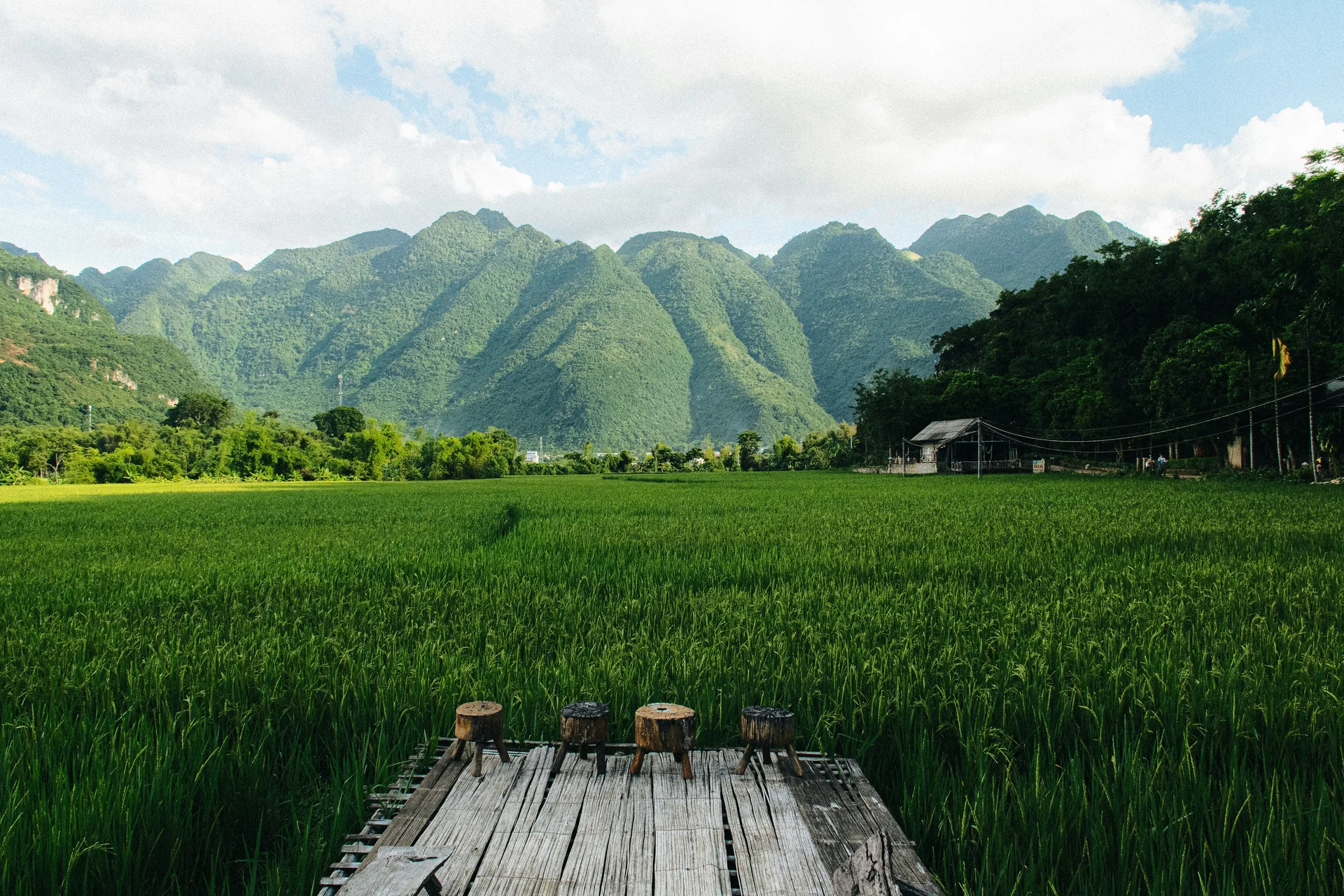
On arrival day, settle in. Many guesthouses here are family-run homestays; this is intentional. You're not just staying in a place; you're witnessing a way of life that moves by different rhythms. These families live close to seasonal cycles, agricultural necessity, and spiritual obligation in ways that urban practitioners rarely encounter. If welcomed, help with simple tasks, carrying water, preparing food, etc. This is karma yoga made tangible.
On Day 5, begin at dawn with a personal yoga practice overlooking the valley. Bring your mat outside. The air is cooler here, the light soft. Practice for an hour...whatever that means for your body that day. The absence of other practitioners, of music, of a studio creates space for genuine listening to what your body actually needs, not what you think you should do.
Then walk. Follow rice terrace paths upward. Stop often. The Vietnamese highlands are home to a subtle ecosystem; simply paying attention to it is its own practice. Notice birdsong. Watch how water moves through terraces. Observe how the White Thai people have engineered agriculture so that it flows with the landscape rather than dominating it. This is applied yoga philosophy...harmony through understanding natural patterns rather than imposing will.
In the evening, if offered, participate in the evening meal with your host family. These meals are rarely silent, but they contain a different kind of attention than what you're used to. Conversation is punctuated by pauses. Food is served simply, often harvested that morning. Notice the difference between eating for nutrition and eating as an act of family presence.
Before sleep, sit outside. The stars here are extraordinary. The Milky Way visible. In traditional Buddhist practice, contemplating vast space is one path to ego dissolution. Let the scale of the universe do its work.
Day 6: Overnight Bus to Hoi An (or fly to Da Nang)
A long travel day, but there's practice in travel itself...in sitting with discomfort, in not fighting the tedium but moving through it with presence. If flying, do so. If taking the overnight bus, understand this is part of Vietnam's actual rhythm; locals navigate this all the time.
Arrive in Hoi An early morning. Sleep if needed. Hoi An will wait.
Day 7-8: Hoi An - Slowing Into Coastal Rhythm

This is where you might finally take a formal yoga class, if that appeals. Several excellent teachers offer small-group or private sessions in Hoi An studios. But equally valid: spend the morning doing nothing but sitting by the Thu Bon River, watching fishing boats, watching the light change.
On Day 8, take a half-day trip to nearby Marble Mountains (near Da Nang). These five limestone peaks each represent an element and contain temples carved into their faces. Climb slowly. Stop at temples. Light incense if you feel called. Climb the caves. The practice here is one of gradual ascent, literal and metaphorical.
Spend the afternoon on a beach. Any beach. Notice the quality of rest available to you.
Day 9: Hue - Imperial Complexity

Visit temples within the Citadel, not as a checklist but as a pilgrimage. Tu Duc's Tomb, in particular, is set in peaceful gardens designed by and for an emperor. Walk the grounds slowly. Read the inscriptions. Understand that even within imperial luxury, seekers built spaces for contemplation.
Meditate at sunset by the Perfume River. The city lights reflect on water in ways that are achingly beautiful.
Day 10: Departure or Continuation
Depending on your flight, spend this as a gentle return to the present moment. Return to Hanoi or fly to Ho Chi Minh City, depending on your departure. Use this final day to journal, reflect, and integrate whatever the journey has offered.
Practical Wisdom
What to bring:
- A lightweight yoga mat or travel cloth (yoga studios have mats, but having your own offers comfort)
- Comfortable walking shoes
- A meditation cushion if that's important to your practice
- A good notebook
Language: English is spoken in tourist areas but less common in rural regions. Download a translation app. Point at things. Smile. These are universal languages.
Money: Vietnam is affordable. Budget $30-50 daily for food and mid-range accommodation. Splurge on experiences, not hotels.
Yoga classes: Hanoi and Ho Chi Minh City have several studios. Hoi An and other towns rarely have formal classes. This is the point...to practice outside structured environments.
Integration & The Practice Beyond
This itinerary works because it honors Vietnam as it is, not as a backdrop to your practice. The yoga here isn't confined to the mat. It's in the quiet of dawn tai chi in Hanoi parks. It's in the slow rowing through limestone caves. It's in the discipline of sitting with discomfort on an overnight bus. It's in the humility of being a stranger in a place with 4,000 years of layered history.
Many Western yoga practitioners come to Asia seeking authenticity, only to recreate their home studios in new locations. There's nothing wrong with that, but consider something different: What if your retreat practice were radically ordinary? What if the teaching came not from a charismatic guru but from an elderly woman rowing a boat, from the way rice terraces sculpt a hillside, from the simple fact of sitting in a temple among people who've been coming to this spot for their entire lives?
This is the secret of Buddhist practice in Asia: enlightenment isn't exotic. It's available in the ordinary texture of daily attention. Vietnamese practitioners don't speak of their morning tai chi as "spiritual practice"...they simply do it, because the body knows it needs movement, because community gathers in the park, because the sun rises and invites presence.
Vietnam asks something of Western seekers: it asks us to arrive with openness rather than expectation, to find the sacred in the ordinary, and to understand that transformation often looks less like enlightenment and more like the simple fact of having shown up, paid attention, and been changed by it.
Consider what you'll take back: not Instagram photos, though you'll have those. Not a better downward dog. But perhaps a different relationship to time, to solitude, to how community is built through presence rather than ideology. Perhaps an embodied understanding that Buddhism, which originated 2,500 years ago just across the border in India, isn't exotic to the people living it...it's home.
In the weeks after you return, the impact might not be immediately obvious. But you'll notice yourself moving slower through your own city. You'll see your morning coffee or tea as the same ritual you witnessed in temples. You'll remember the sound of water moving through rice terraces when you sit to meditate. You'll understand, viscerally, that practice isn't something that happens in a studio at 6 AM...it's the whole texture of how you move through the world.
When you return home, you'll carry not a certificate or a perfect handstand, but the texture of what it feels like to move through the world with genuine curiosity. You'll understand that yoga is ultimately about seeing clearly, and Vietnam, with all its contradiction and beauty, teaches that seeing with remarkable efficiency.
Last updated July 01, 2026 at 20:03 UTC