Beginner Yoga Flow: 11-Step Sequence with Alignment Tips, Breath Cues & Hold Times
Learn a simple beginner-friendly yoga flow with 11 poses including meditation, cat–cow, downward dog and warrior poses. Follow alignment tips, breathing guidance and hold times to build strength, flexibility and calm.
Starting yoga can feel overwhelming, but a simple, well-structured sequence can make the practice approachable and enjoyable. This beginner yoga flow gradually warms up the body, mobilizes the spine, opens the hips and builds strength in the legs and core.
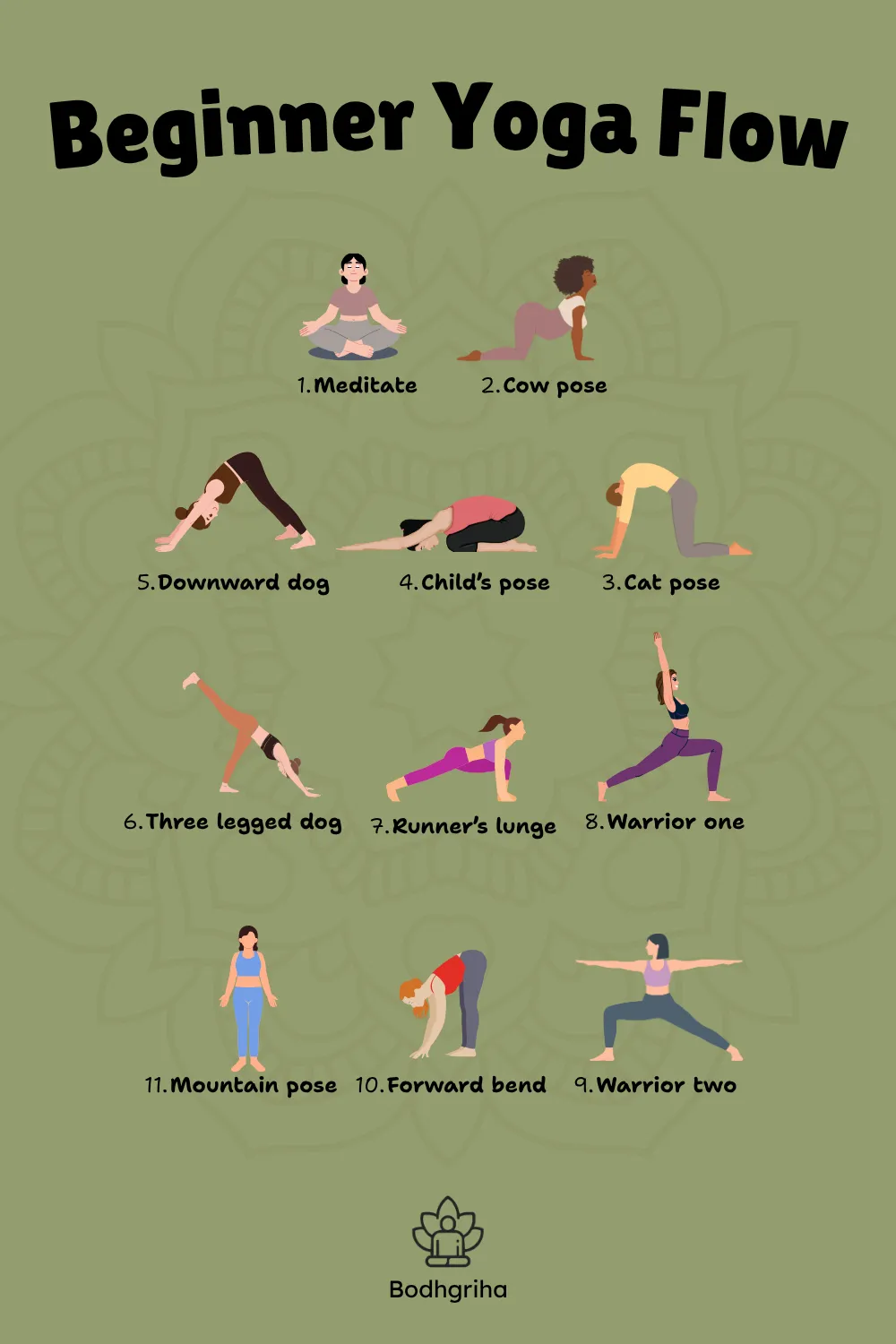
The sequence below follows the exact order shown in the image, beginning with meditation and moving through foundational poses such as Cat–Cow, Downward Dog and Warrior poses before returning to a standing reset.
Move slowly between poses, breathe through your nose and avoid forcing range of motion. Consistency and awareness are far more important than depth.
1. Meditate (Seated Meditation)
Purpose: Center the mind, regulate breathing and prepare the body for movement.
Alignment Tips
- Sit cross-legged or on a cushion
- Lengthen the spine and relax the shoulders
- Rest hands on knees or thighs
- Gently tuck the chin to keep the neck long
Breath Cues
- Inhale deeply through the nose
- Exhale slowly and soften the jaw and shoulders
Hold Time 2–3 minutes
2. Cow Pose (Bitilasana)
Purpose: Open the chest and mobilize the spine.
Alignment Tips
- Hands under shoulders, knees under hips
- Drop the belly gently toward the mat
- Lift the chest and broaden the collarbones
- Keep shoulders away from ears
Breath Cues Inhale as you drop the belly and lift the chest.
Hold Time 3–5 breaths
3. Cat Pose (Marjaryasana)
Purpose: Stretch the back body and activate the core.
Alignment Tips
- Press firmly through palms
- Round the upper back evenly
- Draw the navel toward the spine
- Tuck chin toward chest
Breath Cues Exhale fully as you round the spine.
Hold Time
3–5 breaths
(Flow between Cat and Cow for 5–8 rounds if desired.)
4. Child’s Pose with Arms Extended (Balasana)
Purpose: Gently stretch the spine, relax the nervous system and release tension in the back and shoulders.
Alignment Tips
- Bring hips back toward heels
- Extend arms forward with palms on the mat
- Allow the forehead to rest on the floor or a block
- Keep shoulders soft and relaxed
Breath Cues Inhale into the back ribs, exhale and let the torso sink deeper toward the mat.
Hold Time 6–8 breaths
5. Downward Dog (Adho Mukha Svanasana)
Purpose: Lengthen the spine, stretch hamstrings and strengthen shoulders.
Alignment Tips
- Hands shoulder-width apart
- Feet hip-width apart
- Press evenly through palms
- Lift hips high and lengthen spine
- Slight bend in knees if hamstrings feel tight
Breath Cues Slow, steady breathing expanding through the rib cage.
Hold Time 5–8 breaths
6. Three-Legged Dog
Purpose: Build hip mobility and balance.
Alignment Tips
- From Downward Dog, lift one leg behind you
- Keep hips mostly square to the mat
- Engage the lifted leg without locking the knee
- Maintain strong arms and active shoulders
Breath Cues Inhale to lift the leg, exhale to stabilize.
Hold Time 3–5 breaths each side
7. Runner’s Lunge
Purpose: Stretch hip flexors and prepare the body for standing poses.
Alignment Tips
- Step one foot forward between hands
- Front knee stacked over ankle
- Back leg extended behind
- Keep fingertips or palms on the floor or blocks
Breath Cues Inhale lengthen the spine, exhale sink gently into hips.
Hold Time 5 breaths each side
8. Warrior One (Virabhadrasana I)
Purpose: Strengthen legs, open chest and build stability.
Alignment Tips
- Front knee bent over ankle
- Back foot angled slightly outward
- Hips facing forward
- Arms reaching overhead with relaxed shoulders
Breath Cues Inhale reach arms up, exhale deepen the stance slightly.
Hold Time 5–8 breaths
9. Warrior Two (Virabhadrasana II)
Purpose: Improve leg strength, endurance and focus.
Alignment Tips
- Front knee bent, back leg straight
- Arms extended parallel to floor
- Gaze over front fingertips
- Keep torso upright and shoulders stacked over hips
Breath Cues Slow steady breathing to maintain stability.
Hold Time 5–8 breaths
10. Forward Bend (Uttanasana)
Purpose: Stretch hamstrings and relax the spine.
Alignment Tips
- Hinge from hips
- Allow knees to bend slightly if needed
- Relax neck and shoulders
- Let head hang heavy
Breath Cues Exhale to fold deeper, inhale lengthen the spine.
Hold Time 6–8 breaths
11. Mountain Pose (Tadasana)
Purpose: Reset posture and integrate the practice.
Alignment Tips
- Feet hip-width apart
- Engage thighs gently
- Lift chest and lengthen spine
- Relax arms by sides
Breath Cues Deep, slow breaths to steady the body.
Hold Time 5 breaths
Practice Tips for Beginners
- Move slowly between poses
- Focus on breathing rather than depth
- Use yoga blocks or cushions if needed
- Stop if you feel pain (stretching sensation is okay)
- Practice consistently for gradual improvement
This beginner yoga flow balances gentle spinal mobility, hip opening and leg strengthening while remaining accessible to new practitioners. Over time, repeating this sequence can improve flexibility, posture and overall body awareness.