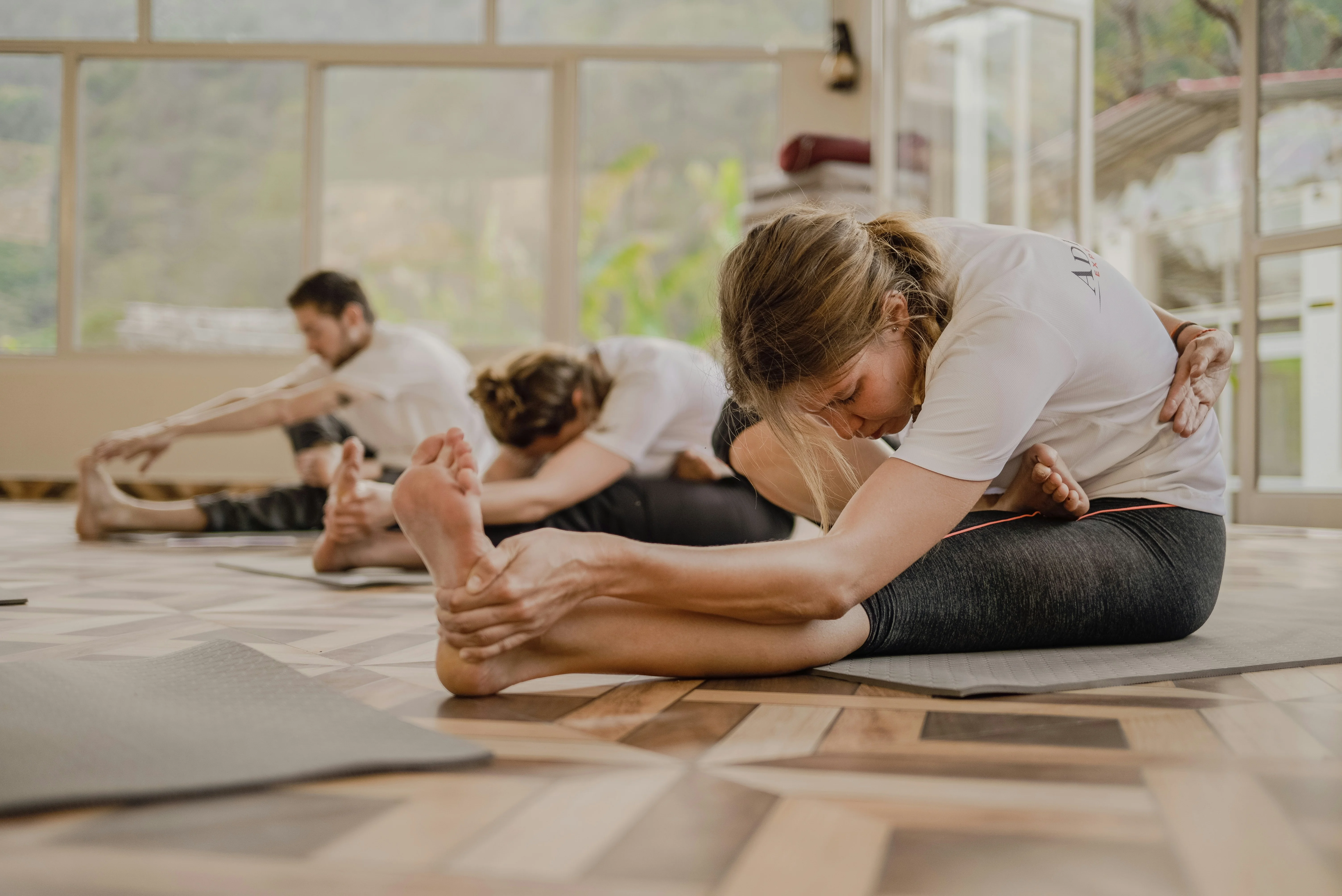
yoga flow
14-Pose Morning Yoga Flow: Beginner-Friendly Sequence
A complete 14-pose morning yoga sequence with detailed alignment tips, hold times, breath cues, and modifications for each pose. This grounding flow takes 20–30 minutes and is perfect for beginners or anyone seeking to establish a calm, mindful morning practice.
Bodhgriha Institute
There is something sacred about practicing yoga in the early hours, when the world is still quiet and the light is soft. A morning practice sets the tone for everything that follows, it quiets the mind, awakens the body, and invites intention into your day. This 14-pose sequence is designed for beginners and those returning to practice after time away. It moves with intelligence and care, warming the spine, building gentle strength, and ending in rest.
This is not a vigorous flow. It is a mindful morning practice, one that takes approximately 20–30 minutes and asks you to move slowly, to breathe deliberately, and to listen to what your body needs. You can practice this flow daily, or several times per week. Over time, you will notice improvements in flexibility, strength, breath awareness, and mental clarity.
Before You Begin: A Few Grounding Principles
Breath is the anchor. Throughout this practice, your breath is your teacher. If you find yourself holding your breath, ease back. If your breathing becomes labored or shallow, you have gone too far. The breath should remain smooth, natural, and full.
Honor your body. Yoga is not about achieving a "perfect" pose. It is about meeting your body where it is today. Some days you will feel open; other days you will feel tight. Both are equally valid. Modifications are not a shortcut, they are the practice itself.
Consistency over intensity. The benefits of yoga compound over time. A gentle practice done daily will transform you more profoundly than an intense practice done sporadically.
The Sequence: 14 Poses for Your Morning
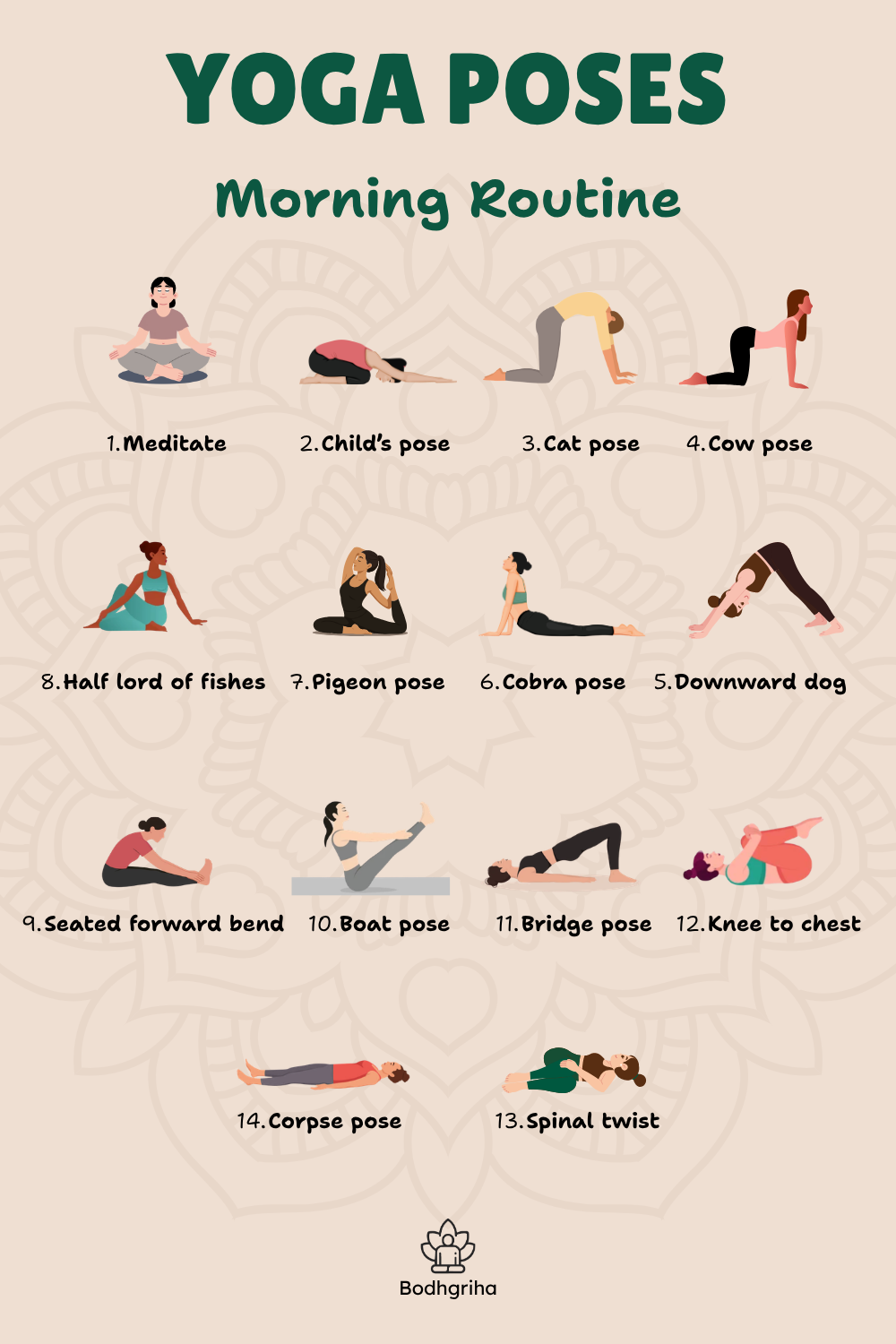
Pose 1: Meditate (Dhyana)
Duration: 1–2 minutes
Begin seated in a comfortable position, either cross-legged on the floor or on a cushion, or in a chair if floor sitting is uncomfortable. Let your spine grow tall without strain. Your shoulders relax down and back. Your hands rest on your thighs, palms up or down, whichever feels more natural.
Alignment Tips: - Close your eyes gently or soften your gaze downward. - Feel your sit bones grounding into the earth. - Release any tension in your jaw and face. - Imagine a silken thread gently drawing the crown of your head toward the sky.
Breath Cues: - Take five complete breaths. Inhale for a count of 4, exhale for a count of 4. - Allow your breath to settle into its natural rhythm. - Notice: Where do you feel your breath? In your belly? Your chest? Your nostrils?
Guidance: This opening moment of meditation is not a warm-up, it is an arrival. You are transitioning from the activity of daily life into the sacred space of practice. Take your time here. Let your mind acknowledge the commitment you are making to yourself.
Pose 2: Child's Pose (Balasana)
Hold: 4–6 deep breaths (30–45 seconds)
From your seated position, bring your big toes together and open your knees wide. Fold forward, lowering your forehead to the floor or a block. Your arms can extend forward, or rest alongside your body. This is a resting pose, and your body should feel supported and calm.
Alignment Tips: - Keep your toes together, knees apart (unless you need to bring knees together for comfort). - Your hips should sink back toward your heels. - If your forehead does not reach the floor, place a block or folded blanket under it. - Your shoulders remain soft; avoid tension in the neck.
Breath Cues: - Breathe deeply into the back body, imagine breath traveling into your upper back and shoulders. - Exhale any tension held in your neck and jaw. - Count: 4-count inhale, 4-count exhale.
Guidance: Child's pose is the reset button. Whenever you need a break during practice, return here. It is a pose of surrender and receptiveness. Allow your forehead to rest, and let your mind settle.
Pose 3: Cat Pose (Marjaryasana)
Hold: 2–3 breaths per round, repeat 4–5 times
From Child's Pose, bring your hands directly under your shoulders and press your torso upright into a tabletop position (hands and knees on the ground). Your knees are under your hips; your hands are under your shoulders. Your spine is neutral, imagine a tray balanced on your back.
As you inhale, drop your belly, lift your gaze, and open your chest, this is the Cow Pose component. As you exhale, draw your chin toward your chest, round your spine, and pull your belly in, this is the Cat Pose. Flow between these two positions with your breath.
Alignment Tips for Cat: - Press firmly through your hands, spreading your fingers wide. - Feel each vertebra of your spine articulate as you round. - Your gaze drops to your thighs; the back of your neck lengthens. - Your shoulders move away from your ears.
Breath Cues: - Exhale as you round (Cat); inhale as you open (Cow). - Make your breath longer than your movement, let movement follow breath, not the reverse.
Guidance: Cat-Cow is not a rigorous stretch; it is a mobilization. Each vertebra moves, awakening your spine and gently warming the body. This is where your practice truly begins.
Pose 4: Cow Pose (Bitilasana)
Hold: 2–3 breaths per round (integrated with Cat Pose above)
As described above, Cow Pose is the counterpoint to Cat. As you inhale, drop your belly, lift your tailbone high, open your chest, and look upward (or softly forward if your neck is sensitive). Your core remains engaged, this is not a collapse backward, but an expansion forward and upward.
Alignment Tips for Cow: - Keep your core engaged; avoid sinking into your low back. - Your shoulders remain active, pressing the floor away. - Lift your gaze gradually; avoid craning your neck back. - Feel your chest expand and your heart center open.
Breath Cues: - Inhale deeply as you expand; feel your ribcage widen. - This is a joyful, opening breath.
Guidance: Cow Pose teaches you the difference between engagement and collapse. Your strength is not found in rigidity, but in the intelligent activation of your core while your heart opens. This is balance.
Pose 5: Downward Dog (Adho Mukha Svanasana)
Hold: 5–8 breaths (45 seconds to 1 minute)
From tabletop, curl your toes under and press your hands firmly into the floor. Press your hips high toward the sky, creating an inverted V-shape with your body. Your hands are shoulder-width apart; your feet are hip-width apart. Your head is neutral, avoid looking forward or forcing your chin to your chest.
Alignment Tips: - Spread your fingers wide and press through your entire hand, not just your palms. - Your shoulders roll back and down, away from your ears. - Your elbows point backward, not flaring outward. - Your hips are high; your heels reach toward (or rest on) the floor. - If your hamstrings are tight, keep a slight bend in your knees.
Breath Cues: - Inhale for 4, exhale for 4. - Feel your breath move down through your spine and out through the crown of your head. - This pose is both energizing and calming, your breath should reflect that balance.
Guidance: Downward Dog is the signature yoga pose, and it serves multiple purposes: it stretches your entire posterior chain (calves, hamstrings, spine), strengthens your shoulders and arms, and brings blood flow to your brain. In traditional practice, it is also considered a mild inversion, which has therapeutic benefits. Don't rush through it. Let your body find ease here.
Pose 6: Cobra Pose (Bhujangasana)
Hold: 3–5 breaths (30–45 seconds)
From Downward Dog, shift forward into a plank position (shoulders directly over wrists). Lower your body down until your chest is near the floor. Your hands remain under your shoulders. As you inhale, press your chest forward and upward, lifting your heart. Your elbows stay close to your ribcage, they do not splay outward.
Alignment Tips: - Press your pubic bone and tops of your feet into the floor for stability. - Your shoulders stay away from your ears; engage your back muscles. - Lift from your heart, not from your hands, your hands are there for support, not to pull you up. - Keep your gaze soft and neutral, or look slightly downward.
Breath Cues: - Inhale as you lift your chest; exhale to hold. - On each exhale, see if you can lift your heart a little higher without strain.
Guidance: Cobra Pose strengthens your back, opens your chest, and awakens the energy along your spine. This is a backbend, and backbends require intelligence, never force yourself deeper. The magic happens in the engagement of your muscles, not in the depth of the pose.
Pose 7: Pigeon Pose (Eka Pada Rajakapotasana)
Hold: 6–8 breaths per side (45 seconds to 1 minute)
Return to Downward Dog. Step your right foot forward between your hands. Square your hips toward the front of the mat. Your right shin angles under your torso; your right foot is near your left hip. Your left leg extends straight back behind you, with the top of your left foot on the floor. Fold forward over your right leg as much as feels comfortable, you can stay upright on your hands, lower to your forearms, or fold fully onto the floor.Alterbatively, you can stay upright and try to grab your left foot with your hands as shown in the image.
Alignment Tips: - Your right knee points toward the right side of the room, not inward. - Keep your hips level; don't let the right hip ride higher than the left. - If your right hip does not reach the floor, place a block or folded blanket under it for support. - Your forward fold should feel like a deep, comfortable stretch, not sharp pain.
Breath Cues: - Breathe deeply into any sensation in your hip or glute. - On each exhale, allow your hips to release a little deeper toward the floor. - This is a pose where breathing makes a profound difference.
Guidance: Pigeon Pose is one of the deepest hip openers in yoga. Your hips hold emotional tension, and this pose helps release it. Move slowly, and never force the fold. The stretch is more powerful than any effort. Repeat on the left side.
Pose 8: Half Lord of the Fishes (Ardha Matsyendrasana)
Hold: 4–6 breaths per side (30–45 seconds)
Return to a seated position on the floor with both legs extended in front of you. Bend your right knee and place your right foot on the floor outside your left knee. Your right hand stays behind you for support. Inhale to lengthen your spine; as you exhale, gently twist toward your right, hugging your right knee toward your chest with your left arm. Your gaze follows your twist.
Alignment Tips: - Keep your spine long; don't collapse forward. - Your twist comes from your thoracic spine (mid-back), not your lower back. - Your right sitting bone stays grounded. - Only twist as far as your breath allows.
Breath Cues: - Inhale to prepare; exhale to deepen the twist. - Never force a twist, let your breath guide you. - Breath in a twist is especially powerful; feel it help you release tension along your spine.
Guidance: Twists wring out your spine, stimulate digestion, and help release held emotion. They also prepare your spine for more demanding poses later. This particular twist is milder than some, making it suitable for morning practice. Repeat on the left side.
Pose 9: Seated Forward Bend (Paschimottanasana)
Hold: 6–8 breaths (1–1.5 minutes)
Extend both legs straight out in front of you. Flex your feet so your toes point toward your face. Inhale to lengthen your spine; as you exhale, fold forward from your hips, reaching your hands toward your feet. You may grip your shins, ankles, or feet, whatever is accessible to you. The goal is not to get your forehead to your knees; the goal is to keep your spine long and let your hamstrings gradually release.
Alignment Tips: - Flex your feet actively; this helps your hamstrings release more effectively. - Keep a micro-bend in your knees if your hamstrings are tight, there is no prize for straight legs. - Feel the fold happening from your hips, not your lower back. - Your neck is neutral; allow your head to hang heavy.
Breath Cues: - Breathe slowly and deeply. Count 4 in, 4 out. - On each exhale, feel your spine lengthening and your hamstrings softening. - This is a calming pose—let your nervous system settle.
Guidance: Seated Forward Bend is both a stretch and a mild inversion. It calms the nervous system and deeply stretches the entire back body. Hold here for a full minute if possible. This is not a competitive pose; it is an act of surrender to your body's wisdom.
Pose 10: Boat Pose (Navasana)
Hold: 3–5 breaths (30–45 seconds)
Sit upright with knees bent and feet on the floor. Lean back slightly and lift your feet off the ground, bringing your shins parallel to the floor. Your torso is at a 45-degree angle. Extend your arms forward, parallel to the ground and parallel to each other. Your chest is lifted; your gaze is soft. Your core is engaged, this is an active strength pose, not a collapsed one.
Alignment Tips: - Keep your chest lifted and your shoulders away from your ears. - Your shins should be parallel to the floor; your knees are at a 90-degree angle. - Your core is the foundation of this pose, engage your lower belly and draw your lower ribs in. - If holding this is too intense, keep your feet on the floor and simply lift your chest back slightly.
Breath Cues: - Breathe steadily and evenly. This is a challenging pose, so your breathing may be more labored. - Maintain steady breathing; never hold your breath. - Count 5 breaths and release.
Guidance: Boat Pose builds core strength and awakens your abdominal muscles. It also ignites your internal fire (your agni). While it is physically demanding, it prepares you for deeper forward folds and backbends. This is where strength meets stability.
Pose 11: Bridge Pose (Setu Bandhasana)
Hold: 5–8 breaths (45 seconds to 1 minute)
Lie on your back with knees bent and feet on the floor, hip-width apart. Your feet are parallel and positioned about one foot away from your hips. Press your feet firmly into the floor and lift your hips toward the sky. Interlace your hands under your back if possible, pressing your shoulders down and opening your chest. Your weight is distributed evenly across your feet and shoulders, not on your head.
Alignment Tips: - Keep your feet parallel; don't let your knees splay outward or collapse inward. - Your hips are level, don't let one side sink. - Press your shoulders down and back, opening your chest. - Your neck is neutral; avoid turning your head side to side. - Engage your glutes and core to protect your lower back.
Breath Cues: - Inhale to lift; exhale to settle into the pose. - Breathe deeply and allow your chest to expand on each inhale.
Guidance: Bridge Pose is a wonderful backbend that strengthens your glutes, legs, and back while opening your chest. It is accessible and deeply beneficial. For many people, Bridge Pose is more sustainable and less intense than deeper backbends, making it ideal for morning practice. Hold for a full minute if comfortable.
Pose 12: Knee to Chest
Hold: 3–5 breaths per side (30–45 seconds)
Lying on your back, hug your right knee toward your chest. Keep your left leg extended, or bend your left knee with your left foot on the floor, whichever feels better for your lower back. Use your hands to gently draw your right knee closer, feeling a stretch in your right glute and hip. Your lower back stays on the floor; don't lift your hips.
Alignment Tips: - Keep your head and shoulders relaxed on the floor. - If your lower back is not comfortable, keep your left foot on the floor. - Your right knee can point toward your right shoulder (for a deeper stretch) or straight toward your chest (for a gentler stretch).
Breath Cues: - Breathe deeply and allow your hip to release on each exhale. - This is a simple, direct stretch, let it work without forcing.
Guidance: This is a transition pose that stretches your hip and glute, and prepares your spine for the twists to come. It also provides a gentle counter-stretch after backbends. Repeat on the left side.
Pose 13: Spinal Twist (Supta Matsyendrasana)
Hold: 4–6 breaths per side (30–45 seconds)
Lying on your back with both knees bent, drop both knees to the right side of your body while keeping your shoulders flat on the floor. Your right knee may rest on your left knee, or you can bring it toward the floor. Extend your left arm out to the side for balance, and turn your gaze to the left (or keep it neutral, looking up). You should feel a gentle twist through your spine.
Alignment Tips: - Keep both shoulders grounded; don't let your upper back roll forward. - The twist should be gentle and comfortable, don't force your knees to the floor. - If your knees do not reach the floor, support them with a pillow or blanket. - Your neck is neutral; turn your gaze only as far as is comfortable.
Breath Cues: - Breathe steadily and evenly. - On each exhale, allow your knees to drop a millimeter deeper—no forcing. - Twists help your body release stored tension; let your breath facilitate that release.
Guidance: Reclined twists are milder than seated twists and are perfect for ending your practice. This twist wrings out your spine from a restful position, helping you release any final tension. Repeat on the left side.
Pose 14: Corpse Pose (Savasana)
Hold: 5–10 minutes (if possible)
Extend both legs straight out on the floor. Your feet fall open naturally, about hip-width apart. Your arms rest alongside your body, palms facing up. Your entire body is relaxed and supported by the floor. Close your eyes. This is not a pose of effort; it is pure rest.
Alignment Tips: - Use props if needed: a pillow under your head, a block under your knees, a blanket over your body. - Your body should feel completely supported and comfortable. - Let go of any attempt to "do" anything, surrender fully to gravity.
Breath Cues: - Allow your breath to return to its natural rhythm. - You are not working here; you are simply breathing and being. - Let your nervous system settle.
Guidance: Savasana is not a luxury, it is an essential part of your practice. This is where your body integrates the work you have done. Without Savasana, a practice is incomplete. Lie here for at least 5 minutes. Many teachers recommend 10 minutes of Savasana for every hour of active practice. This is the most powerful pose on the mat.
Total Practice Duration
- Meditation (Pose 1): 1–2 minutes
- Poses 2–13 (active practice): 15–20 minutes
- Savasana (Pose 14): 5–10 minutes
- Total: 20–32 minutes
This is an entirely reasonable morning practice. If you have less time, you can shorten holds or combine some poses. If you have more time, deepen holds in poses that feel especially beneficial.
Tips for Consistent Practice
Create a sacred space. Designate a corner of your home where you practice. Keep it clean and quiet. Use props (blocks, straps, blankets) freely, they are not signs of weakness; they are tools of wisdom.
Practice at the same time each day. This trains your body and mind to expect practice. Morning, before breakfast, is ideal—your body is rested, and the energy of the day is still quiet.
Listen to your body. Yoga teaches self-awareness. If a pose doesn't feel right, modify it or skip it. Your body's signals are wiser than any instruction.
Be patient with yourself. Flexibility, strength, and breath awareness develop over weeks and months...not days. The practice compounds over time. Trust the process.
End with gratitude. As you come out of Savasana, take a moment to acknowledge the gift of practice. You have given yourself an hour of intentional, loving attention. That is sacred work.
This 14-pose morning flow is not a choreographed performance. It is an invitation to move with presence, to listen to your body, and to begin your day from a place of groundedness and calm. Over time, you may find that this practice changes how you move through the world...not just on the mat, but in every moment.
The beauty of a consistent morning practice is that it becomes a refuge. On difficult days, you return to the mat and remember: you are strong, you are held, you are enough.
Last updated June 01, 2026 at 20:03