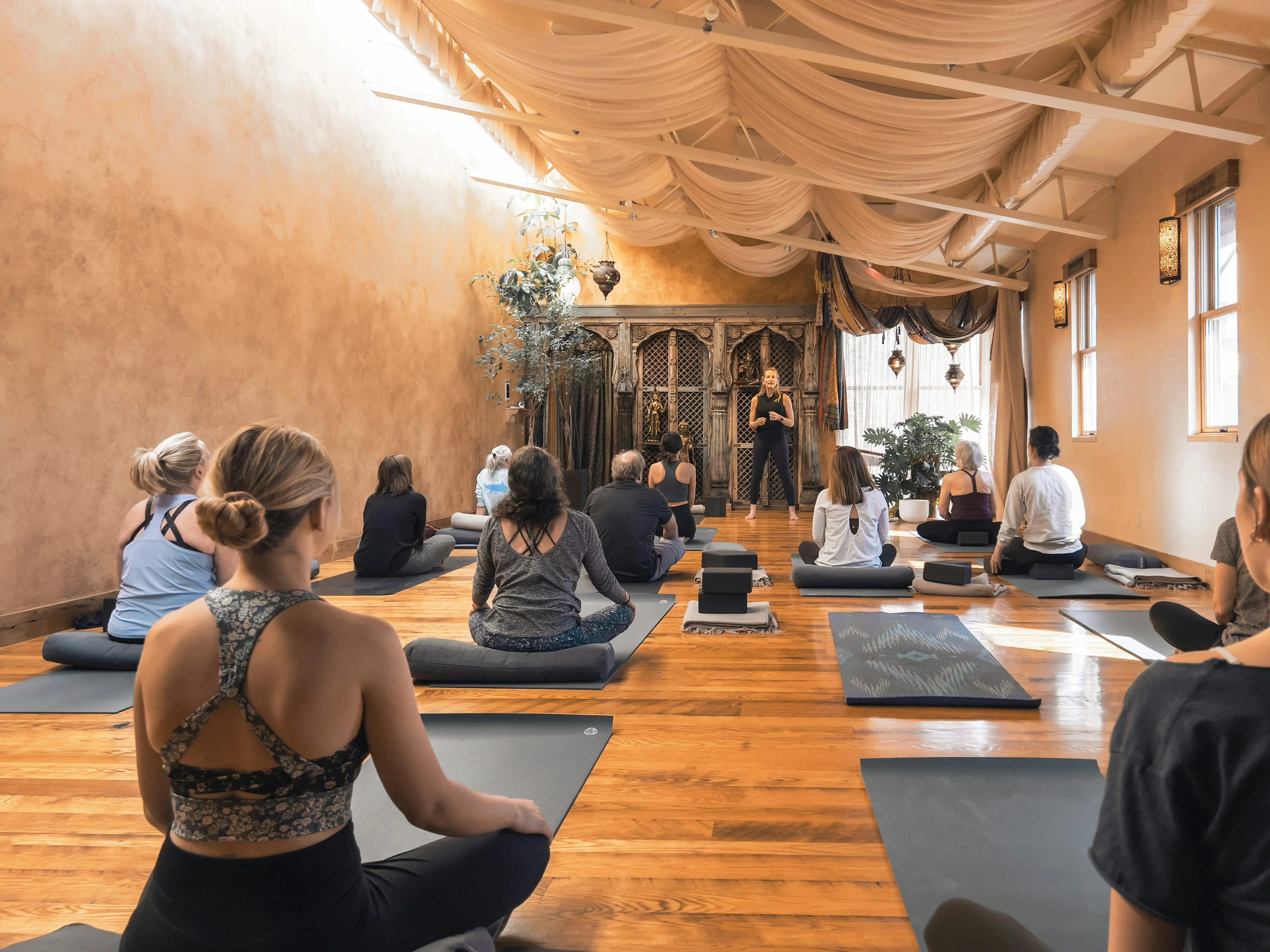
yoga flow
Yoga Statistics 2026-2027: Market Growth, Health Benefits & Trends
Latest yoga industry statistics for 2026-2027 covering global market growth, participation rates, demographics, health benefits, retreat trends, and popular destinations. Includes data on market size projections, gender and age distributions, and scientifically-backed health benefits.
Bodhgriha Team
Bodhgriha Institute
The yoga industry has experienced remarkable expansion over the past five years, transforming from a niche wellness practice into a mainstream global phenomenon. As of 2026-2027, yoga has become one of the most popular health and wellness practices worldwide, with participation rates continuing to climb across demographics and geographic regions. This comprehensive overview covers the latest statistics, emerging trends, proven health benefits, and the most popular yoga retreat destinations.
Market Size and Industry Growth
The global yoga market was valued at approximately $127 billion in 2025 and is expected to reach $269.1 billion by 2033, growing at a CAGR of 9.9% from 2026 to 2033. This represents substantial year-over-year expansion driven by increasing consumer awareness of health and wellness benefits.
The yoga market was valued at $106 billion in 2022, with projections reaching $180 billion by 2027. Various market research organizations provide slightly different valuations based on methodology and included segments, but consensus indicates the industry will surpass $150 billion by 2027.
The yoga mat market alone is predicted to expand from $1.4 billion in 2020 to $2.6 billion by 2026. This growth reflects increased consumer spending on yoga equipment and accessories accompanying expanded practice participation.
Global Participation Rates
More than 300 million people practice yoga worldwide, representing approximately 3.8% of the global population. In Western nations, participation rates are significantly higher.
In the U.S. alone, more than 34 million people practice yoga regularly, making it the most commonly practiced "complementary health approach"—more people doing yoga than jogging. The percentage of American adults practicing yoga increased from 9.5% in 2012 to 14.3% in 2017, with continued growth projected through 2027.
The number of yoga and pilates studios in the U.S. rose from 32,354 in 2017 to 48,547 in 2023, representing an average annual growth rate of 4.6%. This infrastructure expansion reflects increasing demand for in-person instruction alongside growing online options.
Regional Market Leadership
Asia-Pacific led the yoga market and accounted for a share of 37.05% in 2025. This dominance reflects yoga's cultural roots in Asia, particularly India, combined with rapid adoption in China and Southeast Asia.
While North America currently leads the market in revenue, the Asia-Pacific region is anticipated to be the fastest-growing, with a CAGR of 10.8%. This regional growth differential reflects emerging middle-class populations in Asia seeking wellness practices alongside established Western markets.
Within the United States, Vermont ranks as the state with the highest interest in yoga, with Colorado, Massachusetts, Hawaii, and Rhode Island completing the top five states. Among U.S. cities, San Francisco, Denver, and Seattle exhibit the most significant interest in yoga, followed by Boston and Portland.
Demographics and Participant Profiles
Gender Distribution:
Females led the yoga market and accounted for a share of 71.84% in 2025. Women continue to represent the majority of yoga practitioners globally, though gender gaps are narrowing in certain regions.
Male participation is anticipated to witness a CAGR of 9.6% from 2026 to 2033, with growing interest among men for stress management, athletic performance, mindfulness, and meditation. This accelerating male participation reflects changing cultural perceptions of yoga from exclusively feminine to broadly accessible.
Age Distribution:
The 30-50 years age group held the largest revenue share of the yoga industry in 2025, accounting for a share of 43.46%. This demographic typically pursues yoga for stress relief, fitness maintenance, and mental wellness amid work-life balance challenges.
Individuals in the 30-50 age bracket often turn to yoga to relieve stress, maintain fitness, and promote mental relaxation. They seek yoga to balance work-life responsibilities, manage stress, and maintain physical health.
Motivations for Yoga Practice
Practitioner motivations have shifted from purely physical fitness to more holistic wellness approaches. 54% of practitioners report practicing yoga to release tension, while 52% aim to enhance physical and mental strength, and 43% do it to increase happiness. 27% seek personal time, 21% to feel less isolated, and 20% to disconnect from technology.
This data indicates that mental health and stress relief have become primary drivers for yoga adoption, surpassing traditional fitness-focused motivations.
Delivery Mode Trends
By delivery mode, offline yoga led the market and accounted for a share of 73.93% in 2025. In-person studio classes remain the dominant delivery method despite online expansion.
However, online yoga has experienced explosive growth. The COVID-19 pandemic accelerated digital adoption, and platforms offering streaming classes, on-demand videos, and virtual instructor-led sessions have retained significant market share. Online delivery continues to grow at higher compound annual rates than in-person studios, suggesting increasing market penetration.
Retreat and Wellness Travel Trends
78% of travelers are interested in a yoga retreat in the next 12 months. This exceptionally high interest rate reflects yoga retreat positioning as a major wellness travel category.
Yoga retreat spending represents a growing segment of the broader wellness economy. Prices for yoga retreats range from $225 for affordable yoga retreats abroad to $2,300+ for luxury all-inclusive yoga retreat packages. This price range accommodates multiple market segments from budget-conscious practitioners to luxury-focused travelers.
Health Benefits Supported by Scientific Research
Modern scientific research has increasingly validated traditional claims about yoga's health benefits, providing evidence-based justification for medical and wellness professionals to recommend the practice.
Mental Health Benefits:
A 2023 review of 34 studies looking at yoga-based treatments on depressive symptoms concluded that yoga can reduce symptoms of depression and anxiety, making it an effective component of major depressive disorder (MDD) management.
Yoga shows the strongest evidence for reducing anxiety and stress. Research supports gentle, slow yoga practices for anxiety reduction more effectively than vigorous or heated styles.
A large randomized trial presented at the American Society of Clinical Oncology 2026 meeting found that a structured, gentle yoga programme over a month can improve mood, reduce anxiety and lower fatigue in cancer survivors when combined with standard survivorship care.
Physical Health Benefits:
Yoga improves flexibility, strength, and cardiovascular health while simultaneously reducing stress, anxiety, and depression. It enhances sleep quality, regulates hormones, strengthens immunity, and influences gene expression.
Physical benefits of yoga training interventions include decreased body mass index (BMI), improved blood pressure, cholesterol, body weight, and triglycerides, as well as decreased heart rate.
Studies have demonstrated the benefits of yoga in metabolic syndrome with reduction of blood sugar, cholesterol, and hypertension.
Cognitive Benefits:
Common benefits of yoga are demonstrated in physical fitness, mental state, attention, processing speed, memory, cognitive functions and executive functions.
Pediatric and Adolescent Benefits:
The American Academy of Pediatrics (AAP) recommends yoga as a safe and potentially effective therapy for children and adolescents coping with emotional, mental, physical, and behavioral health conditions. Yoga can help children learn to self-regulate, focus on the task at hand, and handle problems peacefully.
In a 2019 study, 5-year-old kindergartners doing yoga twice a week in school in place of standard physical education showed less inattention and hyperactivity and completed a task faster than 5-year-olds doing physical education or no exercise.
Chronic Pain Management:
A 2019 study found promising potential for yoga to improve quality of life in people with chronic pain. For individuals with back pain and other chronic conditions, yoga offers complementary pain management strategies.
Popular Yoga Retreat Destinations
Yoga retreat destinations have diversified beyond traditional centers, with emerging options alongside established locations.
Asia:
The majority of popular yoga retreats are located in Asia, with India, Thailand, Nepal and Indonesia being the most popular destinations.
-
India: As the birthplace of yoga, India offers traditional and authentic yoga retreats. Rishikesh, in particular, is famous for world-class ashrams and spiritual energy. Major retreat centers are located in Rishikesh, Goa, and Kerala. India rose to the 3rd place from its 5th spot in the prior year, indicating renewed popularity among retreat travelers.
-
Bali, Indonesia: Known as the yoga capital of the world, Bali offers countless retreats set among lush greenery, tropical beaches, and serene rice terraces. The most popular places within Bali are Ubud, Canggu, and Kuta, all with different vibes but always with plenty of options. Bali continues to attract wellness travelers due to its serene landscapes and offers yoga, breathwork, healing ceremonies, and digital detox programs.
-
Thailand: With its exotic beaches and tranquil jungles, Thailand offers a serene escape for those looking to deepen their yoga practice in paradise. Beach locations in Koh Phangan, Phuket, and Chiang Mai host numerous retreat centers combining beach relaxation with yoga instruction.
-
Sri Lanka: Sri Lanka combines Ayurveda, pristine beaches, and mountain serenity, with guests able to practice yoga at sunrise overlooking tea plantations, then unwind with traditional therapies rooted in centuries-old practices.
Central America:
- Costa Rica: For nature lovers, Costa Rica's retreats provide the perfect combination of yoga and adventure. Enjoy beachside asanas, rainforests, and wildlife.
Europe:
Yoga retreats in France offer charming villages, vineyards, and coastal regions ideal for combining yoga, good food, and slow living. Portugal offers ocean views, surf towns, and rural escapes with a laid-back atmosphere and lots of time in nature.
Top luxury retreat destinations include Euphoria Retreat in Greece and SHA in Spain.
Budget Considerations:
In Southeast Asia, affordable retreats can still be found in less touristy parts of Thailand, like Chiang Mai, or quieter islands in Indonesia such as Lombok and the Gili Islands, though places like Bali may no longer be as cheap as they once were.
Emerging Trends for 2026-2027
Online and Hybrid Models:
The online yoga segment continues growth at higher rates than in-person segments. Hybrid retreat models combining in-person intensive periods with pre- and post-retreat online support are emerging. The offline segment dominates in terms of market share; however, the online segment is expected to register the highest CAGR during the forecast period. This shift reflects consumer preferences for flexibility, cost reduction, and accessibility from home locations.
Specialized Programs:
Retreat offerings increasingly focus on specific outcomes: burnout recovery, trauma-sensitive yoga, athletic performance enhancement, and age-specific programs for seniors and children. Specialized programming allows retreat centers to differentiate offerings and target practitioners with specific wellness goals beyond general fitness.
Wellness Integration:
Retreats increasingly combine yoga with complementary wellness practices including Ayurveda, meditation, nutrition programs, and digital detox components. This integrated approach addresses multiple dimensions of health simultaneously, appealing to practitioners seeking comprehensive wellness transformations during retreat periods.
Destination Diversification:
Emerging retreat locations beyond traditional centers include Eastern Europe, North Africa, and rural areas within developed nations, expanding access and reducing travel distances for established markets. Geographic expansion reduces travel costs and environmental impact while introducing practitioners to new cultural contexts for their yoga practice.
Gender-Specific Programs:
Reflecting increased male participation, yoga brands and retreat centers develop male-specific and gender-neutral programming to appeal to expanding demographics. Yoga brands started offering more gender-neutral or male-specific yoga apparel and equipment, with male athletes increasingly incorporating yoga into their training routines to enhance flexibility, recovery, and overall performance.
Teacher Training Expansion:
Professional yoga teacher training programs have expanded significantly, with accreditation standards becoming more standardized internationally. Over 30% of yoga schools in Germany now offer accredited teacher training courses, reflecting professionalization trends visible globally. This expansion supports quality standards and career pathway development within the yoga industry.
Longevity and Aging Focus:
The WHO has increasingly emphasized yoga's benefits for healthy aging. On the 12th International Day of Yoga on June 21, 2026, the United Nations explored the theme of 'yoga for healthy ageing', recognizing the potential benefits of practicing yoga as we grow older. By combining gentle movement, breathing and mindfulness, yoga supports balance, flexibility, strength and mobility: abilities essential for staying active and independent as we age.
The yoga industry's continued expansion through 2026-2027 reflects sustained consumer interest in wellness practices combining physical fitness, mental health support, and spiritual development. Market projections indicate the industry will achieve $150 billion+ valuation by 2027, with Asia-Pacific regions experiencing the fastest growth. Scientifically-validated health benefits spanning mental health, physical fitness, cognitive function, and chronic pain management continue to drive adoption across age groups and demographics.
Over 300 million practitioners worldwide engage in yoga, with retreat travel emerging as a significant wellness tourism category. Established destinations in Asia remain dominant, while European and American retreats expand offerings. The combination of proven health benefits, increasing accessibility through online platforms, and growing consumer wellness prioritization positions yoga as a sustained growth sector through the remainder of this decade.
Last updated July 20, 2026 at 20:03 UTC