destination
Ubud Wellness Travel Guide: Yoga, Budget & Practical Planning
Comprehensive Ubud wellness travel guide covering yoga/meditation options ($10-310/month passes), accommodation ($6-400+/night), wellness modalities (Reiki, sound healing, cacao ceremonies, Balinese healing), food culture, daily schedules, activities, seasonal timing, and complete budget planning ($25-300/day).
Bodhgriha Team
Bodhgriha Institute
Ubud represents one of the world's most complete wellness destinations...a place where ancient spiritual traditions seamlessly blend with contemporary wellness culture, creating conditions for genuine transformation. Nestled 25 kilometers inland in Bali's cool Himalayan-like foothills, Ubud attracts yoga practitioners, meditation seekers, wellness travelers, and spiritual explorers from across the globe. This comprehensive guide illuminates exactly what Ubud offers, how to plan your stay, and what to budget for an authentic wellness experience.
Why Ubud? The Spiritual Foundation
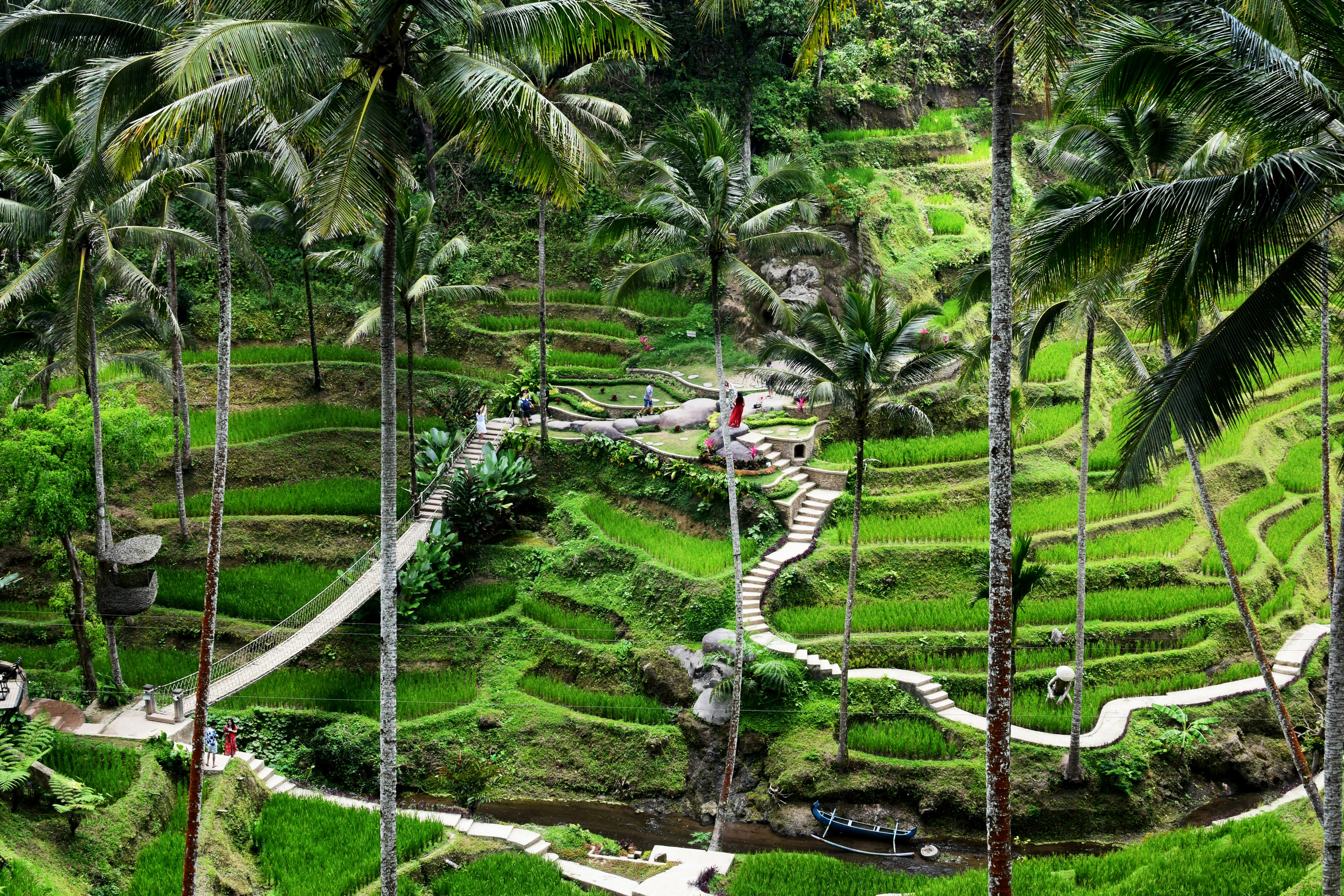
Ubud is Bali's spiritual and cultural heart, and it has been a magnet for yoga practitioners for decades. Set among rice terraces and jungle valleys in the island's interior, the town offers a concentration of yoga studios, retreat centers, and wellness practitioners that few places in the world can match. The appeal goes beyond yoga itself. Ubud's Balinese Hindu culture infuses daily life with ceremony, gratitude, and a spiritual groundedness that guests feel immediately. Morning offerings on doorsteps, temple ceremonies, and the sound of gamelan music create an atmosphere where slowing down feels not just possible but natural.
The name Ubud comes from the Balinese 'Ubad' which means medicine. Ubud has long been known as a mystical place, rich in healing powers so it's not surprising that people flock here to find healing, inner peace, to learn to live a healthier way of life and find their own sense of spirituality.
This isn't manufactured wellness tourism, it's genuine spiritual culture where practice feels supported by the entire environment.

Yoga and Meditation: Ubud's Core Offering
Ubud's yoga studio and meditation center density ranks among the highest in the world. The variety of healing modalities available in Ubud is exceptional. Sound healing, Reiki, breathwork, chakra balancing, inner child work, cacao ceremonies, and traditional Balinese healing all exist alongside conventional yoga. One guest described a week that included "yoga, massages, Reiki, sound healing" and left feeling "rested and having a different mindset."
Studio Offerings and Costs:
Single yoga class costs 160,000 IDR ($10). Five-day pass: 640,000 IDR ($39). Ten-day pass: 1,200,000 IDR ($74). Monthly unlimited pass: 2,250,000 IDR ($138). Three-month unlimited pass: 4,500,000 IDR ($310).
Major studios offer diverse styles from Kundalini and Bikram to Yin and Ashtanga. Class quality remains consistently high, with teachers often trained internationally or representing lineage traditions. Studios typically offer multiple daily sessions (dawn meditation through evening classes), accommodating different practice levels and daily schedules.
Retreat Programs:
Retreats in Ubud range from budget eco-guesthouses to luxury jungle resorts. Short retreats (3 to 5 days) start from $200 to $500 including accommodation, meals, yoga, and spa treatments. Week-long programs run $500 to $1,500. Extended wellness retreats and teacher trainings range from $1,000 to $3,500.
This extraordinary price range reflects real choice, affordable authentic retreats through luxury transformational programs coexist without compromise in either category.
Accommodation: Options for Every Budget
Ubud in 2026 remains Bali's cultural epicenter offering travelers accommodation ranging from $6 hostel dorms to $400+ luxury villas overlooking the Ayung River gorge.
Budget Tier ($6-40/night):
Hostels cost approximately $6-15 nightly, family-run guesthouses $8-15. Budget travelers can find hostels and budget hotels with excellent quality standards. These typically include basic continental breakfast, air conditioning, secure lockers, and social atmosphere.
For a unique, cultural and budget-friendly experience, Ubud offers family homestays. Traditional Balinese families live together in a family compound complete with a family temple, and many of these have opened guest houses in Central Ubud.
Mid-Range Tier ($40-100/night):
Mid-range hotels offer terrace-view rooms with rice paddy scenery right outside the window. These provide private rooms with air conditioning, pool access, included breakfast, and often yoga/wellness amenities.
Rooms in mid-range properties are simple but clean, well-maintained and air-conditioned with continental breakfast included. Locations are often excellent, tucked away in Pengosekan in the South of Ubud away from busy streets but within walking distance to major yoga studios and attractions. Rates start at only $37.
Luxury Tier ($100-400+/night):
Ubud's top resorts (Aman, Four Seasons, COMO) run $400-600+/night but genuinely include breakfast, complimentary yoga, daily activities, and butler service, making them better value than they appear.
Luxury properties offer premium amenities, infinity pools, spa facilities, gourmet dining, personal yoga instruction, and cultural concierge services, often in stunning rice terrace or jungle settings.
Wellness Modalities Beyond Yoga
Ubud's wellness offerings extend far beyond traditional yoga. Sound healing, Reiki, breathwork, chakra balancing, inner child work, and cacao ceremonies exist alongside traditional Balinese healing. Guests can combine yoga with Reiki, sound healing, breathwork, and traditional Balinese healing, all within a short walk or drive.
Available Modalities:
Traditional Balinese Healing: Authentic practices involving traditional massage (using herbal oils and ancient techniques), energy work grounded in Hindu-Buddhist traditions, herbal remedies based on centuries of knowledge, and spiritual healing ceremonies. These practices feel culturally authentic, you're learning from practitioners rooted in living traditions, not commercialized interpretations.
Sound Healing and Meditation: Crystal bowl sessions, gong baths, and singing bowl meditations create profound relaxation states. These sessions typically cost $15-40 and often combine with movement or silent meditation.
Reiki and Energy Work: Licensed practitioners offer sessions ranging $25-60 per hour. Many yoga studios integrate Reiki into retreat programs or offer standalone sessions.
Breathwork (Pranayama) Intensives: Specialized breathing practice classes ($10-20 drop-in) teach techniques for energy cultivation, stress relief, and mental clarity. Teachers often guide transformation experiences through breath alone.
Cacao Ceremonies: Traditional plant-medicine ceremonies using ceremonial-grade cacao, combined with sound healing, movement, and intention-setting. These cost $30-70 and offer community connection alongside spiritual practice. Ceremonies remain grounded in authentic Mesoamerican tradition rather than New Age repackaging.
Holistic Counseling and Coaching: Many retreat centers employ facilitators offering trauma-informed coaching, life guidance, and personal development work integrated with yoga and meditation practice.
Authentic Balinese healing practices, involving traditional massage, herbal remedies, and spiritual healing, complement Western wellness modalities. This integration creates comprehensive healing environments rarely found elsewhere globally.
A Typical Wellness Day in Ubud
Understanding daily rhythms helps with planning and managing expectations:
Early Morning (5:00-6:30 AM): Most yoga studios offer dawn meditation or gentle practice as temperatures cool slightly. Sunrise over rice terraces from your accommodation creates perfect contemplation. Many travelers wake early naturally, jet lag transforms into spiritual advantage.
Mid-Morning (7:00-9:00 AM): Breakfast at your guesthouse or at a wellness café (smoothie bowl, acai bowl, fresh fruit). Breakfast is the largest meal for many, fuel for midday practice or activities.
Morning Practice (9:00-11:00 AM): Primary yoga session, often more vigorous than early meditation. Classes typically 60-90 minutes. Afterward, rest in savasana or quiet time. Some practitioners combine two classes, others move into activities.
Late Morning/Early Afternoon (11:00-1:00 PM): Activities: temple visits, cooking classes, trekking, art studio visits, or simply rest. Many take lunch at local warungs ($3-8 meals) or wellness cafés ($8-15). Afternoon heat settles in, indoor activities or rest become attractive.
Afternoon (1:00-4:00 PM): Rest period-many practitioners nap, journal, read, or enjoy pool time. Retreat programs often schedule wellness modalities: massages, Reiki, sound healing, or consultations. This is prime time for individual attention and processing.
Late Afternoon (4:00-6:00 PM): Optional second practice—often Yin Yoga, restorative practice, or meditation. Sunset time provides natural wind-down before evening. Some take this time for activities.
Evening (6:00 PM onwards): Dinner (mix of local and wellness restaurants), cultural performances (traditional dance, gamelan concerts), or evening community gatherings. Many retreat programs offer evening satsangs (spiritual gatherings) or dharma talks (teachings).
Night (9:00 PM+):
Most practitioners retire early, tropical heat and full practice schedule naturally support rest. Some use evening for journaling, reflection, or simply savoring silence.

Food Culture and Nutrition
Ubud's food scene balances local authenticity with wellness-oriented dining.
Budget Dining (Local Warungs): Street food costs $2-3, with traditional meals at local warungs (family-run restaurants) ranging $3-8 including nasi goreng (fried rice), mie goreng (fried noodles), and soto ayam (chicken soup). These provide authentic, affordable nutrition without wellness markup.
Wellness Cafés (Mid-Range): Bali's health food and café scene attracts wellness tourists with smoothie bowls IDR 60,000-100,000 ($4-6.50), elaborate salads IDR 80,000-150,000 ($5-10), avocado toast IDR 70,000-120,000 ($4.50-8), and fresh juices IDR 40,000-70,000 ($2.60-4.50). These Instagram-worthy dishes cost 2-3 times equivalent warung meals while delivering Western presentation and ingredients (quinoa, kale, almond milk).
Culinary Experiences: A Balinese cooking class in Ubud with a local market tour costs around $49-95. You can learn to cook traditional food with a local family and learn all about their cuisine. These immersive classes combine cultural education with practical cooking skills and genuine community connection.
Climate and Seasonal Timing
Ubud sits 600 meters elevation 25 kilometers inland from Seminyak, creating 3-5°C cooler temperatures (20-27°C versus coastal 27-32°C), with afternoon rain probability 60-70% even during dry season May-October due to highland microclimate, and lush green landscapes year-round requiring rain gear and layered clothing.
Dry Season (May-October): Best weather predictability, lower rainfall, cooler temperatures, morning mists creating magical rice terrace views. Peak season pricing applies.
Wet Season (November-April): More rain (particularly January-February heaviest), higher humidity, lush green landscapes, fewer tourists, 20-30% lower retreat pricing. Rain typically comes in afternoon downpours, leaving mornings clear for practice.
January and February experience the heaviest rainfall, making it wise to avoid visiting at this time, especially since weather will limit activities, bring out insects, and cause landslides and possible flooding.

Activities and Attractions Beyond Yoga
Cultural Experiences: Ubud offers nightly traditional dance performances at IDR 100,000 ($7) tickets and the Sacred Monkey Forest sanctuary with 1,200+ long-tailed macaques at IDR 100,000 weekday admission. These provide authentic cultural immersion and wildlife connection.
Nature and Adventure: Rice terrace trekking, waterfall visits (Tegallalang Falls, Kanto Lampo), temple exploration, and jungle walks integrate seamlessly with wellness practice. Many retreat programs include nature-based activities recognizing wellness extends beyond studio practice.
Artistic Engagement: Ubud's thriving arts community-painting studios, sculpture workshops, traditional craft centers, allows visitors to engage creativity alongside contemplative practice.
Total Budget Planning: Complete Breakdown
Daily costs range $25-40 for budget travelers (hostel $8-15, street food $8-12, scooter rental $4-5), $60-90 mid-range couples (hotel $40-70, restaurant meals $20-30, private driver $40-55), $150-300 luxury travelers.
7-Day Ubud Wellness Trip Budget:
Budget Tier Total:
- Accommodation: $60 (hostel 7 nights @ $8-10)
- Meals: $60 (mix of warungs and affordable cafés)
- Yoga classes: $70 (daily drop-in classes)
- Activities/transport: $40 (temple visits, local transport)
- Total: $230 for 7 days ($33/day)
Mid-Range Tier Total:
- Accommodation: $350 (mid-range hotel 7 nights @ $50)
- Meals: $140 (mix of warungs and wellness cafés)
- Retreat program or daily yoga + wellness: $280 (yoga passes, massage, other modalities)
- Activities/guides: $70 (cooking class, guided trek, cultural activities)
- Total: $840 for 7 days ($120/day)
Luxury Tier Total:
- Accommodation: $1,050 (luxury resort 7 nights @ $150+)
- Meals: $280 (mix of resort dining and premium restaurants)
- Wellness program + spa: $500 (comprehensive retreat elements or daily spa treatments)
- Activities/guides: $170 (private guides, specialized experiences)
- Total: $2,000 for 7 days ($285/day)
With International Flights:
Add $600-1,200 from North America/Europe, $400-800 from Australia, depending on origin and season.

Transportation and Logistics
Getting There: Ngurah Rai International Airport (30km from Ubud) handles most international flights. Airport transfers cost $20-40 by shuttle, $50-70 by private driver (pre-arranged through accommodation is reliable).
Local Movement: Scooter rental ($4-8/day) is practical for confident riders. Taxi/ride-hailing apps cost $2-5 for most in-town journeys. Walking covers Ubud's central areas easily.
Travel Documents: Visa-free entry for most nationalities (30 days). Travel insurance recommended (especially for activity-based coverage).
Practical Recommendations
For First-Time Wellness Travelers: Start with 5-7 day retreats balancing yoga, other wellness modalities, and cultural exploration. Mid-range accommodations provide comfort without overwhelming budget. Use structured retreat programs for framework and community.
For Experienced Practitioners: Consider 2-week extended programs for deeper work. Budget tier ashram-style living supports intensive practice. Off-season visits (November-April) offer smaller groups and personalized attention.
Timing Strategy: Book 2-3 months ahead for peak season (June-August) to secure preferred accommodation. Shoulder seasons (April-May, September-October) offer balance-better rates, still-acceptable weather, moderate crowds.
Ubud's Transformative Power
Unlike manufactured retreat settings, Ubud's spirituality is woven into the town itself. Balinese Hindu culture, temple ceremonies, and daily offerings create an environment where inner work feels supported by the entire surroundings.
Ubud accommodates every budget level and practice style, from $25/day backpacker wellness exploration to $300+/day luxury transformational retreats. What unites all experiences: genuine spiritual foundation, world-class instruction, authentic cultural immersion, and transformative results.
Whether seeking intensive yoga practice, broader wellness exploration, cultural immersion, or complete lifestyle reset, Ubud delivers at a fraction of equivalent Western wellness destinations' costs.
Last updated September 21, 2026 at 20:03 UTC