Yoga Flow for Stress Relief: 10-Pose Sequence with Breath & Hold Guidance
Practice a calming yoga flow for stress relief with 10 beginner-friendly poses. Includes step-by-step guidance, breath cues, alignment tips and hold times to relax your body and reset your nervous system.
Stress doesn’t just live in the mind...it shows up in the body. Tight shoulders, shallow breathing, restlessness and fatigue are all signs of a nervous system that hasn’t had a chance to slow down.
This yoga flow is designed to gently guide your body from activation into relaxation. It combines grounding standing poses, light strength, gentle stretches and controlled breathing to help release tension and restore balance.
Move slowly. Focus on your breath. There’s no need to rush or push. The goal is not intensity...it’s regulation.
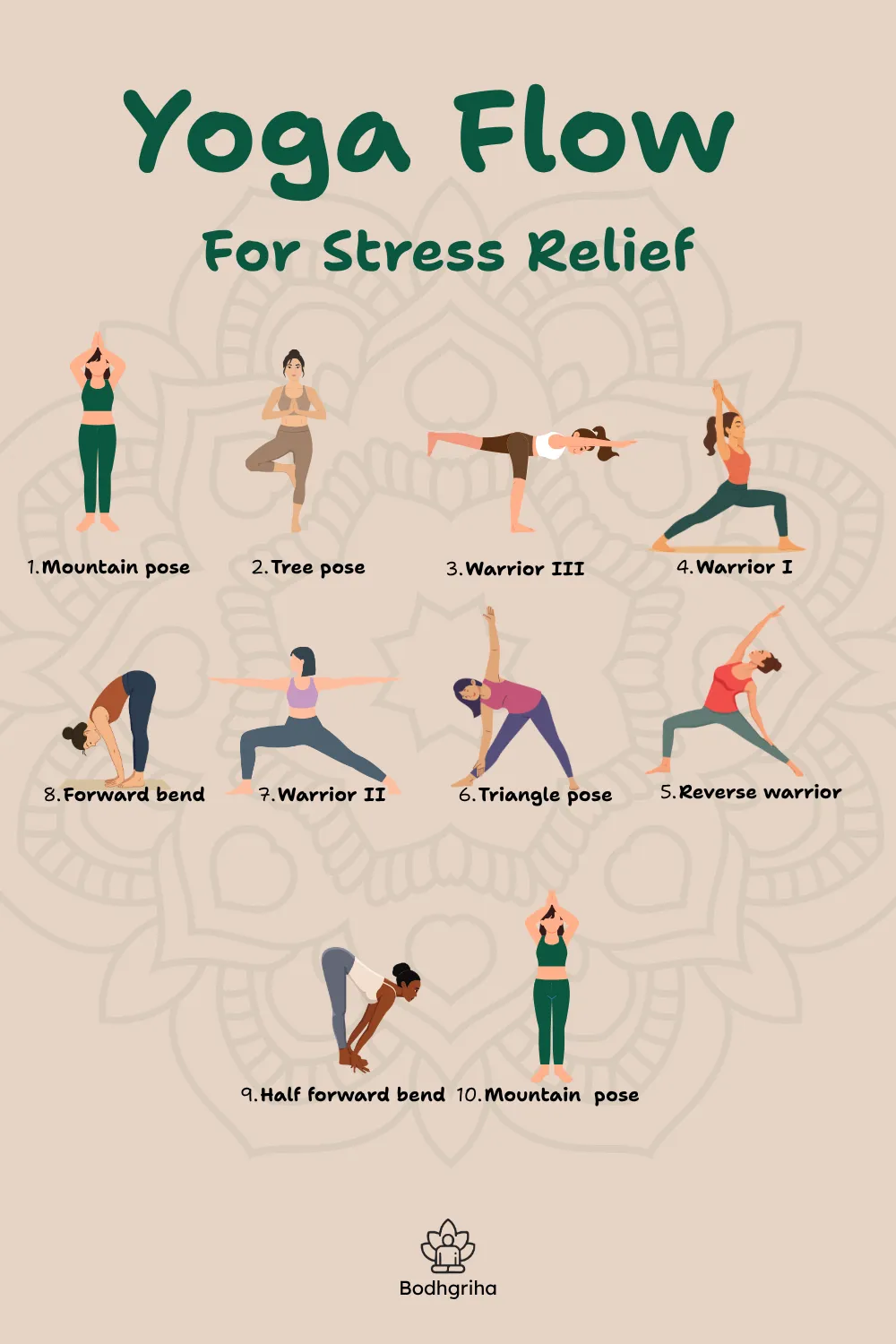
1. Mountain Pose (Tadasana)
Purpose: Ground the body and establish breath awareness.
Alignment Tips:
- Feet hip-width apart
- Spine tall, shoulders relaxed
- Arms by your sides or palms together
Breath Cue:
- Inhale deeply through the nose
- Exhale slowly, soften the body
Hold Time:
5–8 breaths
2. Tree Pose (Vrikshasana)
Purpose: Improve balance and focus while calming the mind.
Alignment Tips:
- Place one foot on ankle, calf or inner thigh
- Avoid pressing directly on the knee
- Keep hips level and core engaged
Breath Cue:
- Slow, steady breathing
- Focus gaze on one point
Hold Time:
5 breaths per side
3. Warrior III (Virabhadrasana III)
Purpose: Build strength and concentration.
Alignment Tips:
- Hinge forward from hips
- Keep back leg lifted and active
- Engage core for stability
Breath Cue:
- Inhale to lengthen
- Exhale to stabilize
Hold Time:
3–5 breaths per side
4. Warrior I (Virabhadrasana I)
Purpose: Open chest and hips while building strength.
Alignment Tips:
- Front knee bent, back leg strong
- Hips facing forward
- Arms reaching overhead
Breath Cue:
- Inhale lift chest and arms
- Exhale sink gently into the pose
Hold Time:
5–8 breaths
5. Reverse Warrior
Purpose: Stretch the side body and open the chest.
Alignment Tips:
- Front knee stays bent
- Back hand rests lightly on leg
- Reach top arm overhead
Breath Cue:
- Inhale expand the side body
- Exhale deepen the stretch
Hold Time:
4–6 breaths per side
6. Triangle Pose (Trikonasana)
Purpose: Improve flexibility and release tension in the spine.
Alignment Tips:
- Straighten front leg
- Reach forward before lowering hand
- Keep chest open and shoulders stacked
Breath Cue:
- Inhale lengthen spine
- Exhale rotate chest open
Hold Time:
5–8 breaths per side
7. Warrior II (Virabhadrasana II)
Purpose: Build endurance and focus.
Alignment Tips:
- Front knee aligned over ankle
- Arms extended parallel to the floor
- Gaze over front hand
Breath Cue: - Maintain steady, controlled breathing
Hold Time:
5–8 breaths
8. Forward Bend (Uttanasana)
Purpose: Calm the nervous system and stretch the back body.
Alignment Tips:
- Bend knees slightly if needed
- Let head and neck relax
- Avoid pulling or forcing
Breath Cue:
- Exhale deeply as you fold
- Inhale soften into the stretch
Hold Time:
6–10 breaths
9. Half Forward Bend (Ardha Uttanasana)
Purpose: Lengthen the spine and reset posture.
Alignment Tips:
- Hands on shins or floor
- Spine long, chest open
- Avoid rounding the back
Breath Cue:
- Inhale lift and lengthen
- Exhale hold steady
Hold Time:
4–6 breaths
10. Return to Mountain Pose
Purpose: Integrate the practice and settle the body.
Alignment Tips:
- Stand tall, relaxed and steady
- Arms by sides or hands at heart
Breath Cue:
- Slow, deep breaths
- Notice changes in body and mind
Hold Time:
5–8 breaths
How This Flow Relieves Stress
This sequence works by gradually shifting your nervous system from a state of tension to a state of calm.
- Standing poses build grounding and focus
- Balance poses improve mental clarity
- Forward folds activate the parasympathetic response
- Controlled breathing slows heart rate and reduces anxiety
The combination creates a full-body reset without overwhelming the system.
Practice Tips
- Move slowly between poses
- Prioritize breath over depth
- Practice in a quiet space
- Stay present instead of rushing through the sequence
- Repeat regularly for best results
Even 10–15 minutes of consistent practice can significantly improve how your body responds to stress.
Stress relief doesn’t require extreme effort. It requires consistency, awareness and a willingness to slow down.
This yoga flow is simple by design. It meets you where you are and helps guide your body back into balance.
Over time, this kind of practice doesn’t just reduce stress...it changes how you respond to it.