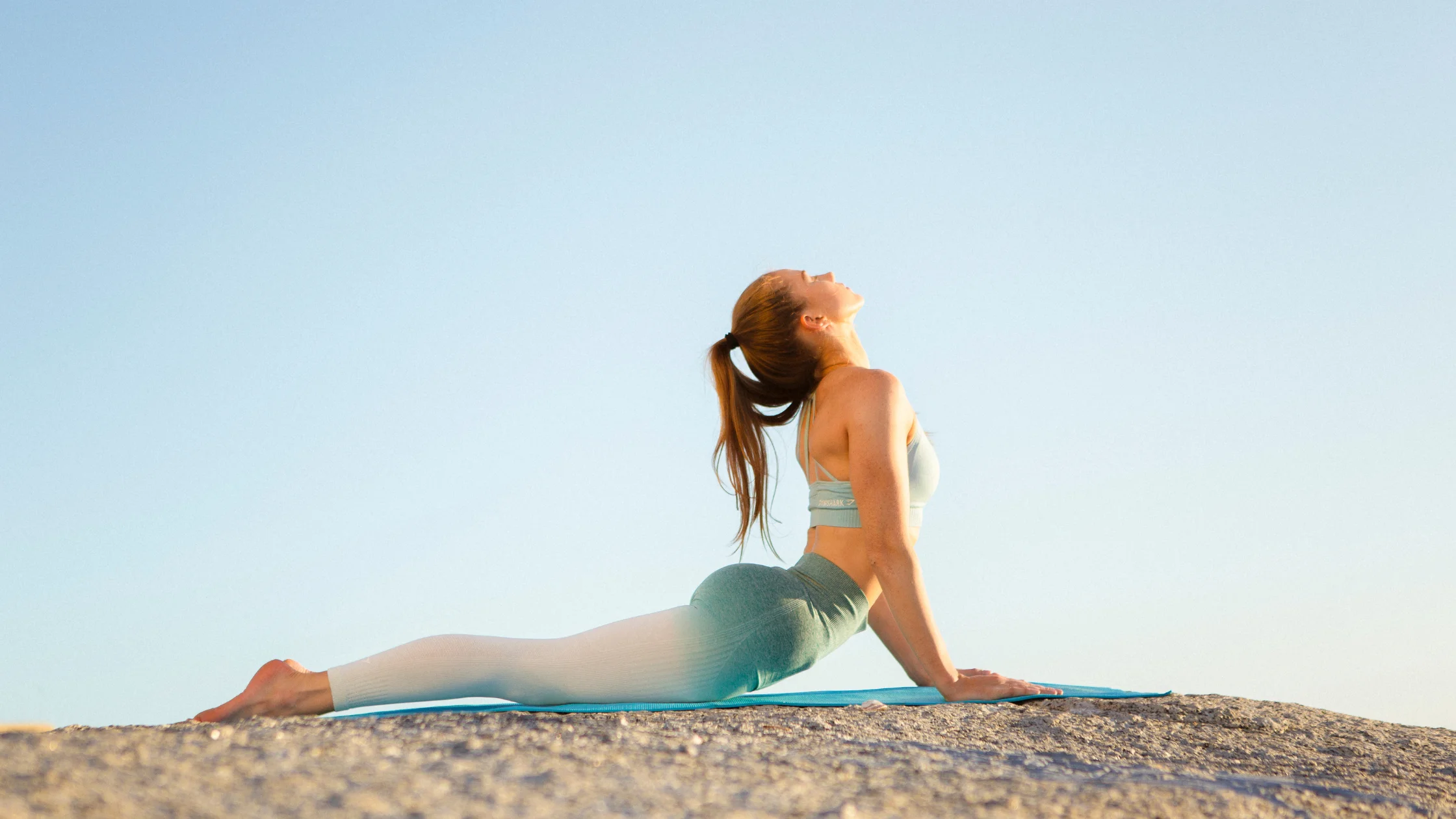
Yoga for Doshas: 15 Poses to Balance Vata, Pitta & Kapha
Explore 15 yoga poses tailored to balance your doshas...Vata, Pitta, and Kapha...with alignment tips, breath guidance, and hold times. Learn how to ground, cool, or energize your body and mind through yoga, the Ayurvedic way.
According to Ayurveda, the ancient Indian system of medicine, we each embody a unique constitution made up of three doshas: Vata, Pitta, and Kapha. These energies influence our physical, mental, and emotional characteristics and when imbalanced, can lead to discomfort or disease.
Yoga offers a powerful way to balance these doshas through movement, breath, and mindfulness. In this guide, you’ll discover 15 yoga poses (five for each dosha) along with alignment tips, breathwork, and how long to hold each posture. Whether you're feeling scattered, overheated, or sluggish...there’s a pose here to help bring you back into balance.
Vata Dosha (Air & Space Elements)
The Vata dosha governs movement, communication, and the nervous system. When out of balance, Vata can lead to anxiety, dryness, restlessness, or insomnia. The key is to ground, warm, and stabilize.
Best Practices
- Practice in a warm, quiet space.
- Move slowly with intention.
- Hold each pose for 5–10 breaths.
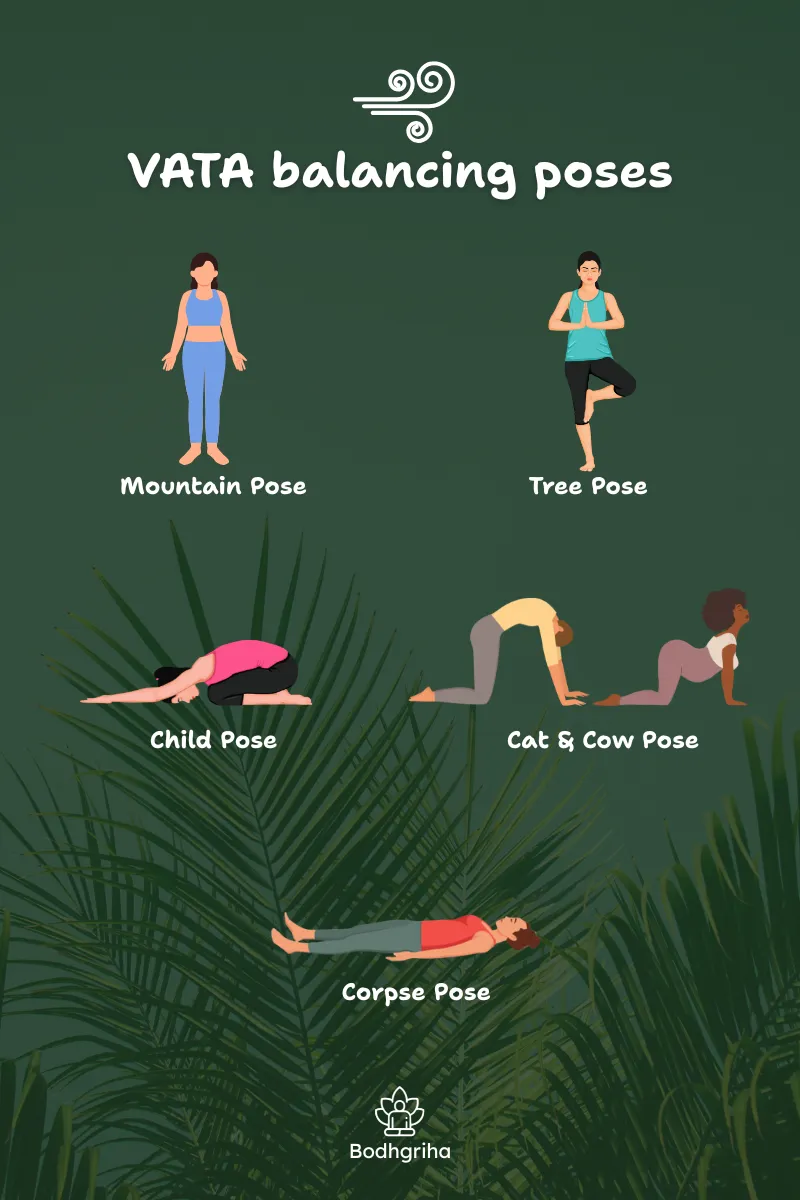
Vata-Balancing Poses
1. Mountain Pose (Tadasana)
- Alignment: Stand tall with feet hip-width apart, arms at sides, spine long.
- Breath: Inhale to lift and root through the feet; exhale to settle.
- Hold: 5–8 breaths
2. Tree Pose (Vrikshasana)
- Alignment: Balance on one leg, foot on ankle or inner thigh. Avoid the knee joint.
- Breath: Steady inhales and exhales to enhance focus and grounding.
- Hold: 5 breaths per side
3. Child’s Pose (Balasana)
- Alignment: Knees wide, big toes touching, forehead rests on mat.
- Breath: Slow abdominal breathing.
- Hold: 10–15 breaths
4. Cat-Cow (Marjaryasana-Bitilasana)
- Alignment: On all fours, shoulders over wrists, hips over knees.
- Breath: Inhale to arch (cow), exhale to round (cat).
- Hold: 5–8 rounds
5. Corpse Pose (Savasana)
- Alignment: Lie flat, arms at sides, palms up.
- Breath: Natural breath awareness.
- Hold: 3–10 minutes
Pitta Dosha (Fire & Water Elements)
Pitta governs digestion, intellect, and metabolism. When aggravated, it can manifest as irritability, inflammation, or burnout. The key is to cool, relax, and release intensity.
Best Practices
- Practice in a cool, calming space.
- Avoid overexertion or competition.
- Emphasize forward bends and twists.
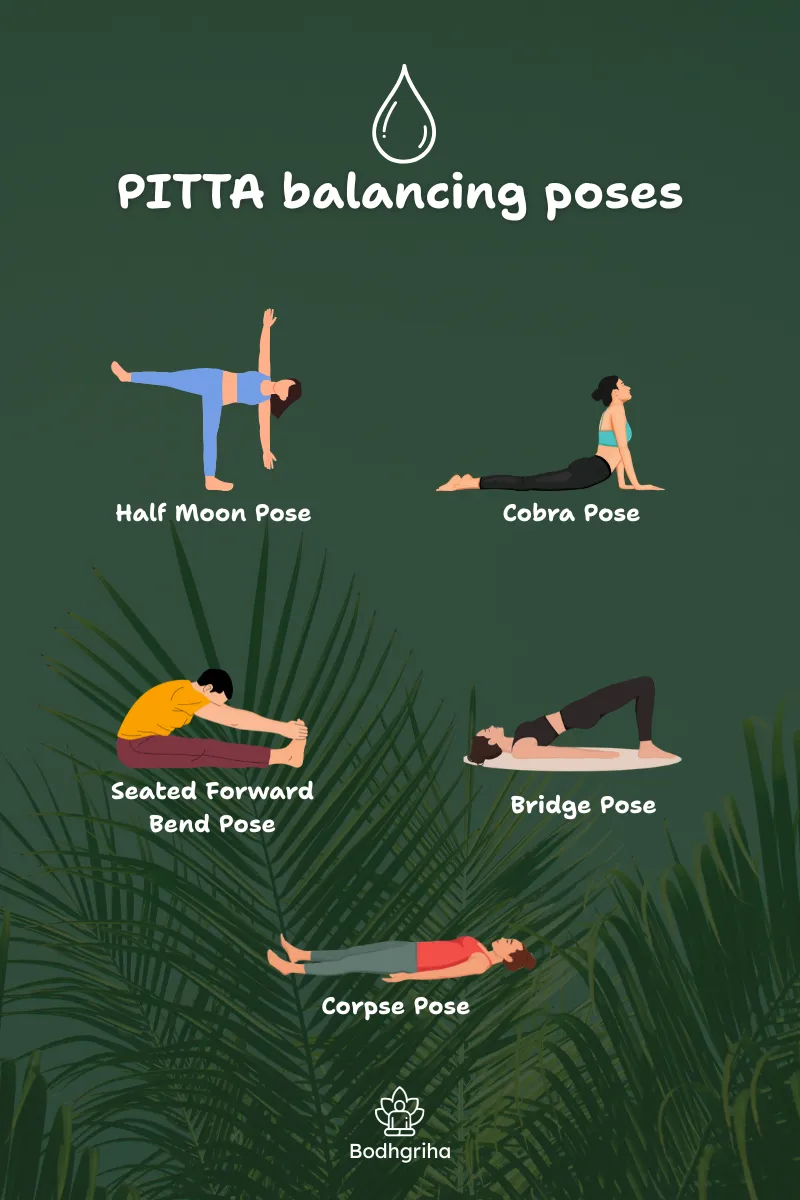
Pitta-Balancing Poses
1. Half Moon Pose (Ardha Chandrasana)
- Alignment: From triangle pose, lift one leg and one arm, body parallel to floor.
- Breath: Inhale to lengthen, exhale to balance.
- Hold: 3–5 breaths
2. Cobra Pose (Bhujangasana)
- Alignment: Lie on belly, hands under shoulders, lift chest gently.
- Breath: Inhale to rise, exhale to soften.
- Hold: 4–6 breaths
3. Seated Forward Fold (Paschimottanasana)
- Alignment: Sit with legs extended, fold from hips with soft knees.
- Breath: Inhale to lengthen, exhale to fold deeper.
- Hold: 8–10 breaths
4. Bridge Pose (Setu Bandhasana)
- Alignment: On back, feet hip-width, lift hips using core and glutes.
- Breath: Inhale to lift, exhale to lower.
- Hold: 6–8 breaths
5. Corpse Pose (Savasana)
- Same alignment as Vata
- Hold: 5–15 minutes
Kapha Dosha (Earth & Water Elements)
Kapha governs structure, immunity, and stability. In excess, it can feel like sluggishness, congestion, or attachment. The antidote is stimulation, lightness, and warmth.
Best Practices
- Practice in a warm, bright space.
- Choose energizing sequences and backbends.
- Keep breath and pace dynamic.
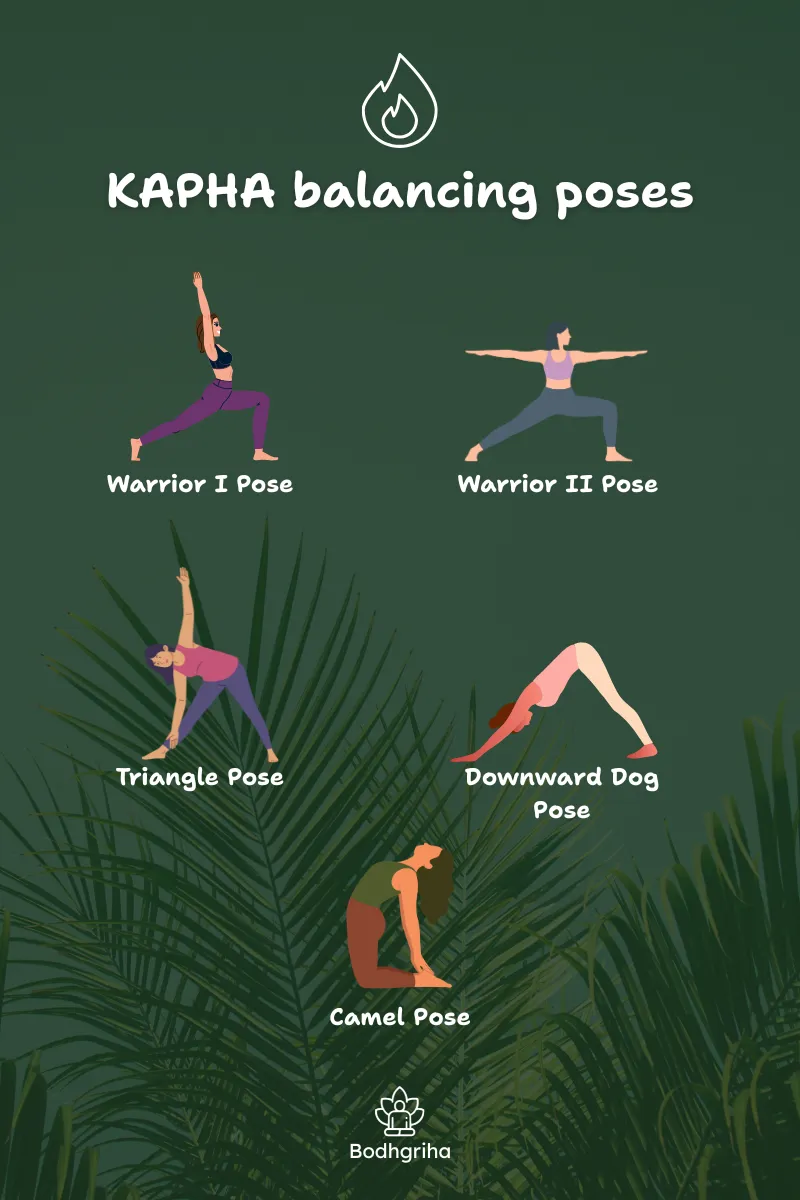
Kapha-Balancing Poses
1. Warrior I (Virabhadrasana I)
- Alignment: Front knee bent, back leg extended, arms overhead.
- Breath: Inhale to rise, exhale to root.
- Hold: 5 breaths
2. Warrior II (Virabhadrasana II)
- Alignment: Arms extended, hips open, gaze over front fingers.
- Breath: Steady breaths to build stamina.
- Hold: 5–7 breaths
3. Downward Dog (Adho Mukha Svanasana)
- Alignment: Hands and feet rooted, hips high, spine long.
- Breath: Inhale to elongate, exhale to ground.
- Hold: 5–8 breaths
4. Triangle Pose (Trikonasana)
- Alignment: Legs wide, reach front arm to shin or block, top arm up.
- Breath: Inhale to expand, exhale to stabilize.
- Hold: 6–8 breaths
5. Camel Pose (Ustrasana)
- Alignment: Kneeling, hands on heels or hips, chest lifts, gaze up.
- Breath: Inhale into the heart space.
- Hold: 3–5 breaths
Balancing your dosha with yoga doesn't require perfect poses or deep flexibility. It’s about tuning into how you feel and moving with awareness. Use these poses as daily or weekly rituals to bring harmony between your body, breath, and inner rhythms. And alway, listen to your body. Modify where needed, and practice with compassion.
Share this article