Self-Care Yoga Flow: Gentle Yoga Sequence for Relaxation and Recovery
A calming self-care yoga flow with step-by-step alignment tips, breath counts, and pose durations to release tension, support the nervous system, and restore balance.
Self-care yoga is not about pushing, achieving, or perfecting shapes. It is about listening, slowing down, and creating space for the body and mind to soften. This gentle yoga flow is designed to calm the nervous system, release stored tension, and reconnect you with your breath.
The sequence moves gradually from grounding postures into gentle backbends and twists, ending with deep relaxation. Practice slowly. Let the breath guide every transition.
You can practice this flow in the morning for grounding or in the evening to unwind.
How to Practice This Flow
- Move slowly and intentionally
- Breathe through the nose if possible
- Rest whenever needed
- Use props like blankets or bolsters for support
Each pose includes alignment guidance and suggested breath counts rather than strict time limits.
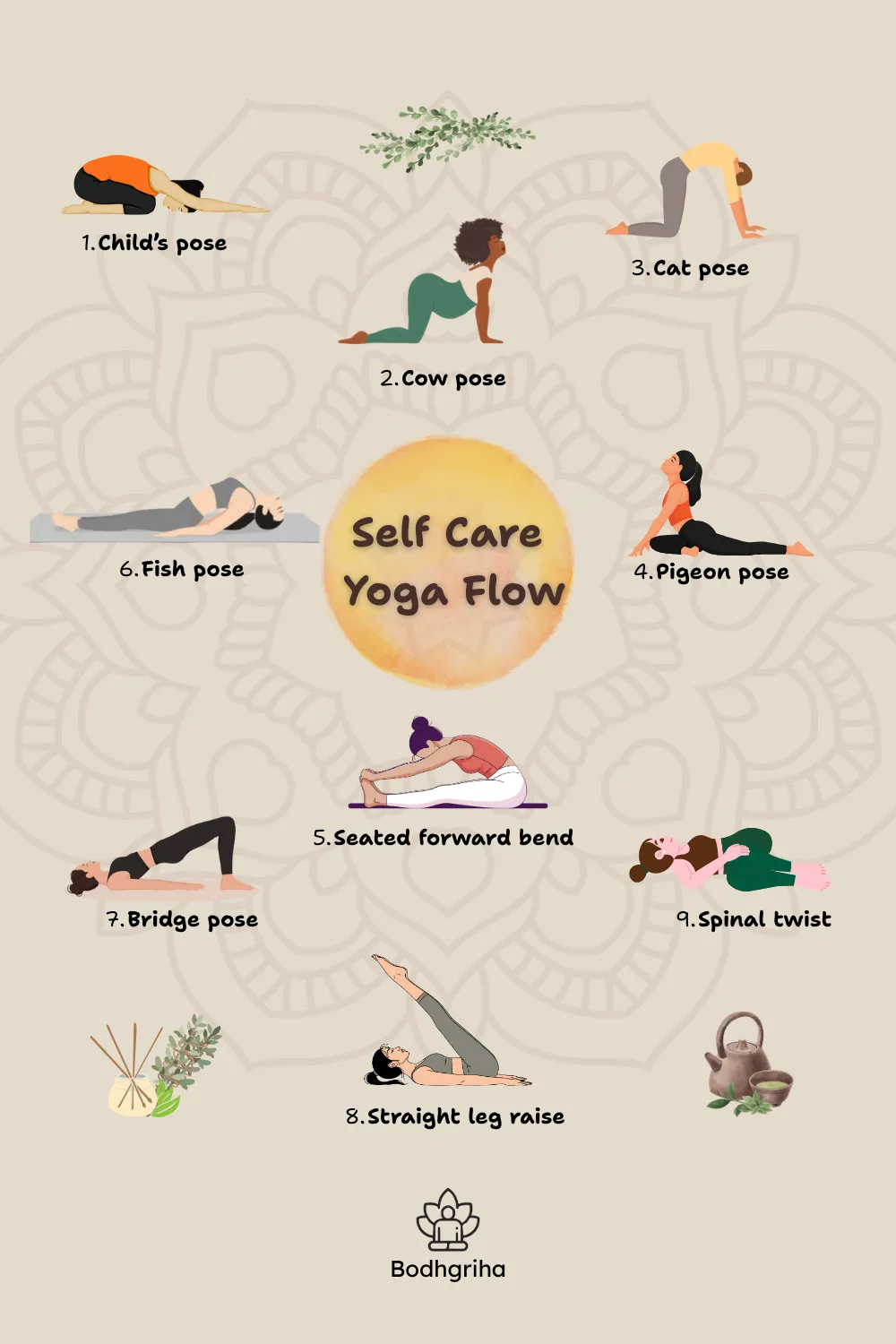
1. Child’s Pose
Child’s Pose sets the tone for the entire practice. It invites the body into stillness and signals safety to the nervous system.
Alignment Tips
- Knees together or wide, depending on comfort
- Big toes touching
- Hips resting toward the heels
- Forehead supported on the mat or a block
- Arms extended forward or relaxed by the sides
Breath & Hold
- Hold for 10–15 slow breaths
- With each exhale, allow the chest and belly to soften toward the thighs
2. Cow Pose
Cow Pose gently opens the chest and encourages spinal extension while warming the body.
Alignment Tips
- Hands under shoulders, knees under hips
- Inhale as you drop the belly
- Lift the chest and tailbone
- Gaze forward or slightly upward without compressing the neck
Breath & Hold
- Hold for 5–7 breaths
- Focus on expanding the chest and rib cage on each inhale
3. Cat Pose
Cat Pose releases tension from the back and neck while encouraging mindful breathing.
Alignment Tips
- Exhale as you round the spine
- Press the floor away with your hands
- Tuck the chin gently toward the chest
- Draw the navel toward the spine
Breath & Hold
- Hold for 5–7 breaths
- Move slowly between Cow and Cat if desired, linking movement to breath
4. Pigeon Pose
Pigeon Pose deeply releases the hips, an area where emotional and physical tension is often stored.
Alignment Tips
- Front shin angled comfortably, foot flexed
- Back leg extended straight behind
- Hips squared as much as possible
- Use a block or blanket under the hips if needed
- Keep the spine long before folding forward
Breath & Hold
- Hold for 10–15 breaths per side
- Breathe steadily and soften resistance with each exhale
5. Seated Forward Bend Pose
This pose calms the mind and gently stretches the spine and hamstrings.
Alignment Tips
- Sit tall with legs extended
- Inhale to lengthen the spine
- Hinge forward from the hips
- Keep a soft bend in the knees if needed
- Avoid rounding aggressively
Breath & Hold
- Hold for 8–12 breaths
- Focus on length rather than depth
6. Fish Pose
Fish Pose counterbalances forward folding and opens the chest and throat.
Alignment Tips
- Lie on your back
- Place hands under hips, palms down
- Press into forearms to lift the chest
- Crown of the head lightly touches the mat
- Keep weight mostly in the elbows
Breath & Hold
- Hold for 6–10 breaths
- Breathe into the chest and collarbones
7. Bridge Pose
Bridge Pose gently strengthens the back body while opening the heart.
Alignment Tips
- Feet hip-width apart and close to the hips
- Press evenly through the feet
- Lift hips on an inhale
- Keep knees tracking forward
- Option to clasp hands beneath the body
Breath & Hold
- Hold for 6–10 breaths
- Lower slowly with control
8. Straight Leg Raise Pose
This pose strengthens the core while maintaining a calm, steady breath.
Alignment Tips
- Lie on your back
- One leg extended on the mat
- Lift the opposite leg toward the ceiling
- Keep hips grounded
- Engage the core gently
Breath & Hold
- Hold for 6–8 breaths per side
- Lower the leg slowly after each round
9. Spinal Twist
Spinal twists release tension from the lower back and aid digestion.
Alignment Tips
- Lie on your back
- Draw one knee into the chest
- Guide it across the body
- Extend arms out in a T-shape
- Turn the head gently in the opposite direction
Breath & Hold
- Hold for 8–12 breaths per side
- Allow the body to soften with each exhale
Closing the Practice
After completing the sequence, rest on your back in stillness for a few minutes. Observe the breath. Notice sensations without judgment.
Self-care yoga is not about doing more. It is about doing less, with intention.
Practiced regularly, this flow can help regulate the nervous system, improve mobility, and cultivate a deeper sense of calm and self-awareness.
Return to this sequence whenever you need grounding, rest, or reconnection.
Share this article